building-maintenance9Mervin Tan
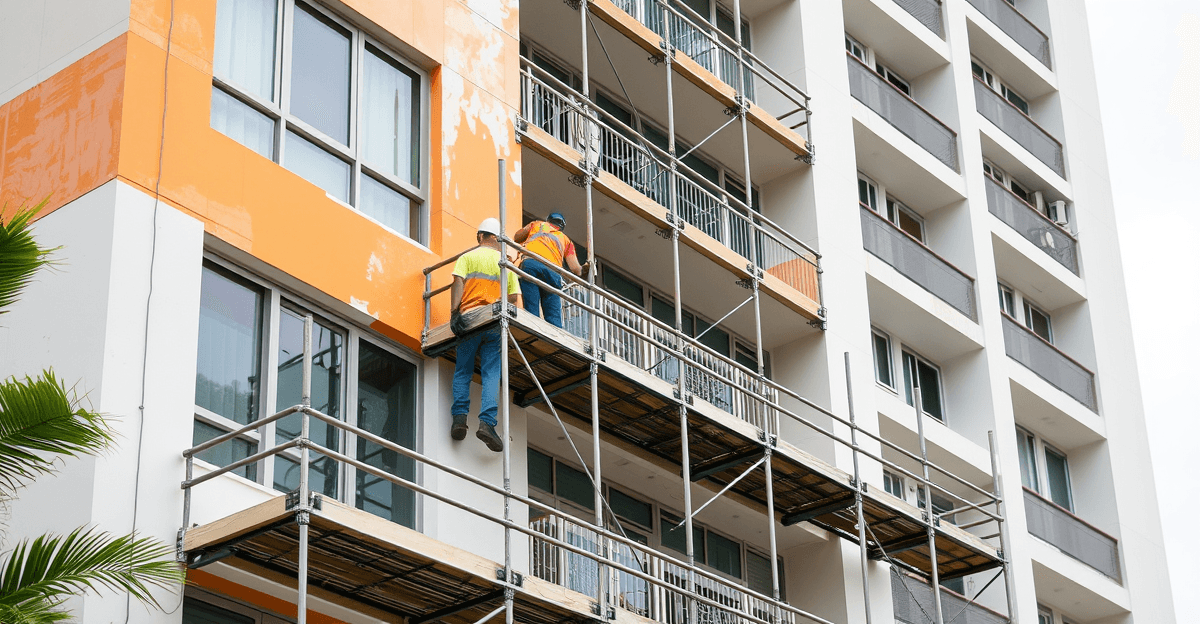
A well-maintained painting schedule for Singapore condo buildings is one of the most visible — and most debated — items on any MCST's maintenance agenda. Exterior paintwork does more than keep a building looking presentable. In Singapore's tropical climate, paint serves as a protective barrier against moisture ingress, UV degradation, and the accelerated carbonation that leads to costly concrete spalling. Getting the recoating cycle right saves money, protects structural integrity, and keeps residents satisfied.
Key Takeaway: Most Singapore condos should plan for full exterior repainting every 5–7 years, with touch-ups and inspections in between. Coastal and heavily exposed facades may need attention as early as every 4 years. Budget S$1.50–S$4.00 per square foot of paintable surface area for exterior work.
Why a Painting Schedule for Singapore Condo Buildings Matters
Exterior paint is a building's first line of defence against Singapore's harsh tropical conditions — year-round UV exposure, average relative humidity above 80%, and approximately 2,340 mm of annual rainfall. When paint deteriorates, moisture penetrates the concrete substrate, corrodes steel reinforcement, and triggers spalling. Repairing spalled concrete costs 5 to 10 times more than preventive repainting.
Beyond structural protection, paintwork directly affects property values. Prospective buyers and tenants form impressions within seconds. A faded, peeling facade signals neglect and can depress resale prices by 3–5% according to property management industry estimates.
Under the Building Maintenance and Strata Management Act (BMSMA), the MCST is responsible for the maintenance and repair of common property, which includes all exterior walls and facades. While the Act does not prescribe a specific repainting interval, failing to maintain paintwork that results in facade defects can attract enforcement action, particularly during BCA's periodic facade inspection regime for buildings over 20 years old.
How Often Should Singapore Condos Be Repainted? Recommended Cycles
The standard repainting cycle for Singapore condo buildings is every 5 to 7 years for exterior surfaces. Here is a breakdown by surface type:
| Surface / Area | Recommended Cycle | Notes |
|---|---|---|
| Exterior facades (rendered/plastered) | 5–7 years | Shorten to 4–5 years for coastal locations |
| Common corridors and staircases | 5–7 years | High-traffic areas may need touch-ups at 3 years |
| Basement and car park walls | 7–10 years | Less UV exposure; monitor for dampness stains |
| Metal railings, gates, grilles | 3–5 years | Rust prevention is critical; use anti-corrosive primer |
| Roof parapet walls | 4–6 years | Highly exposed; often deteriorates faster than main facades |
| Unit entrance doors (common property side) | 5–7 years | Coordinate with corridor repainting for efficiency |
These intervals assume the use of quality exterior-grade acrylic emulsion paint (minimum 2 coats over appropriate primer). Premium elastomeric or silicone-based coatings can extend cycles by 1–2 years but come at a higher upfront cost.
Factors That Shorten the Cycle
- •Coastal proximity: Salt-laden air accelerates paint degradation. Buildings within 500 metres of the coast should inspect paintwork annually.
- •North and west-facing facades: These receive the most monsoon-driven rain and afternoon sun respectively, often showing wear 1–2 years ahead of sheltered faces.
- •Previous poor workmanship: If the last paint job used inadequate surface preparation or incompatible primers, peeling and blistering may appear within 2–3 years.
- •Concrete substrate issues: Active water seepage or carbonation will cause paint failure regardless of coating quality. Address the root cause before repainting.
For a deeper dive into creating schedules that actually hold up, see our guide on preventive maintenance schedule templates.
Still tracking painting schedule jobs in spreadsheets and WhatsApp?
Werkks schedules recurring maintenance, keeps photo records of every completed job, and shows live status across all your contractors and staff. Free for 14 days.
BCA Periodic Inspection and How Painting Fits In
The BCA mandates periodic structural inspections for buildings older than 20 years (every 10 years for non-residential, every 5 years for certain categories). While these inspections focus on structural integrity, facade condition — including paintwork — is a key visual indicator inspectors assess.
Buildings that exhibit widespread paint failure, visible cracks, or spalling are more likely to receive remedial orders. Proactive MCSTs align their painting schedule with periodic inspection cycles to ensure facades are in good condition before inspection.
For buildings approaching the 20-year mark, this is also a good time to evaluate whether a simple repaint suffices or whether the facade requires more extensive remediation, such as skim coat repair, anti-carbonation coatings, or waterproofing treatments. Related maintenance considerations like roof waterproofing should be coordinated with painting projects to avoid scaffolding mobilisation costs being incurred twice.
Planning and Budgeting for a Painting Schedule for Singapore Condo Estates
Cost Estimation
Exterior repainting costs in Singapore typically range from S$1.50 to S$4.00 per square foot of paintable surface, depending on:
- •Building height and access complexity (scaffolding vs. gondola vs. rope access)
- •Surface condition and preparation required
- •Paint specification (standard acrylic vs. elastomeric vs. textured coatings)
- •Colour scheme complexity
For a typical 15–20 storey condo with 150–250 units, total exterior repainting costs generally fall between S$300,000 and S$800,000. This is one of the largest single expenditures an MCST will approve, making accurate job quoting and contractor selection critical.
Sinking Fund Planning
The BMSMA requires MCSTs to maintain a sinking fund for major repairs and improvements. Painting is a foreseeable cyclical expense, so best practice is to set aside provisions annually. For example, if a building expects a S$500,000 repaint every 6 years, the MCST should allocate roughly S$83,000 per year from the sinking fund to cover it without special levies.
Present the repainting plan and budget at the MCST Annual General Meeting well in advance — ideally 12 to 18 months before the planned project start — to secure resident buy-in and allow time for proper procurement.
Contractor Selection
Obtain a minimum of three quotations from BCA-registered contractors. Evaluate on:
- 1.Track record — request references from similar-sized condo projects completed in the last 3 years.
- 2.Paint specification — insist on named brands and product codes, not generic descriptions.
- 3.Surface preparation methodology — this is where quality painting jobs are won or lost.
- 4.Warranty — a reputable contractor should offer a minimum 3-year workmanship warranty.
- 5.Safety record — verify MOM workplace safety compliance and adequate insurance coverage.
Werkks simplifies job scheduling and invoicing for Singapore facilities managers, making it easier to coordinate multi-phase painting projects across blocks, track contractor progress, and manage payment milestones — all without the spreadsheet chaos that typically accompanies large-scale repainting works.
Step-by-Step Process for Condo Repainting Projects
1. Condition Assessment (12–18 months before)
Engage a building surveyor or the painting contractor to conduct a facade condition survey. Document areas of peeling, chalking, cracking, water staining, and any substrate defects. This survey forms the scope of works.
2. Specification and Colour Selection (9–12 months before)
Prepare a detailed painting specification covering surface preparation, primer system, number of coats, and paint products. Select colours — many MCSTs engage architects for colour consultation, especially if the scheme differs from the original. Note that URA may have guidelines on colour schemes in certain planning areas.
3. Tender and Award (6–9 months before)
Issue the tender, evaluate submissions, and award the contract. Allow sufficient time; rushing this phase often leads to poor contractor selection.
4. Execution (Duration: 3–9 months depending on estate size)
Key considerations during execution:
- •Scaffold or gondola erection must comply with MOM Workplace Safety and Health regulations.
- •Resident notifications — inform residents of the schedule block by block, including any window-closing requirements during spraying.
- •Quality checks — conduct regular site inspections to verify surface preparation, coat thickness, and coverage.
- •Integrate painting progress tracking into your maintenance KPI dashboard to ensure the project stays on schedule and within budget.
5. Handover and Defects Liability
Upon completion, conduct a joint inspection with the contractor. Document any defects for rectification. The defects liability period (typically 12 months) should be clearly stated in the contract.
Extending Paint Life Between Full Recoats
You do not always need a full repaint. Strategic touch-ups and maintenance can extend your cycle:
- •Annual visual inspections: Walk the perimeter and photograph any peeling, staining, or cracking. Address isolated areas before they spread.
- •Wash down facades every 2–3 years to remove accumulated dirt, algae, and mould. Pressure washing at appropriate PSI can restore appearance significantly.
- •Spot-repair spalled areas immediately. Even small patches of exposed rebar will worsen rapidly in Singapore's humidity.
- •Maintain drainage — choked gutters and downpipes cause water to cascade down facades, accelerating paint degradation.
For teams managing multiple buildings, tools like Werkks help schedule recurring inspections and touch-up tasks so nothing falls through the cracks. If your organisation is looking for more tailored workflow automation, Adaptels builds custom software solutions for Singapore SMEs with specific operational requirements.
Choosing the Right Paint System for Singapore Conditions
Not all paints perform equally in tropical climates. For Singapore condo exteriors, specify:
- •Exterior acrylic emulsion (standard): Good UV and rain resistance, 5–7 year life. Most common choice.
- •Elastomeric coatings: Bridge hairline cracks up to 0.5 mm, excellent waterproofing. Cost 30–50% more but can extend cycles to 8–10 years.
- •Anti-carbonation coatings: For buildings with carbonation issues. Slows CO₂ penetration and protects reinforcement.
- •Silicone-modified paints: Superior water repellency while maintaining breathability. Ideal for facades with dampness issues.
Always use a compatible primer system. Applying premium topcoats over inadequate primers is a common and costly mistake.
Conclusion
A disciplined painting schedule keeps Singapore condo buildings structurally sound, visually appealing, and compliant with BMSMA maintenance obligations. Plan for full exterior recoating every 5–7 years, budget through the sinking fund, and invest in proper surface preparation and quality coatings to get the most out of each cycle. Proactive touch-ups and inspections between full repaints can extend coating life and reduce long-term costs significantly.
For a comprehensive view of all mid-year maintenance tasks including painting assessments, check out our mid-year building maintenance checklist.
Sources
- 1.Building and Construction Authority (BCA) — Periodic Inspection of Buildings
- 2.Building Maintenance and Strata Management Act (BMSMA)
- 3.Ministry of Manpower — Workplace Safety and Health (WSH) Guidelines
- 4.Singapore Statutes Online — Building Control Act
- 5.National Environment Agency — Weather Statistics for Singapore
Frequently Asked Questions
How often should Singapore condo buildings be repainted?
Most Singapore condo buildings require exterior repainting every 5 to 7 years. However, buildings in coastal areas or those with north-facing facades exposed to heavy monsoon rain may need recoating as early as every 4 years. The BCA recommends periodic inspections to assess paint condition as part of the building's overall maintenance programme.
Is exterior painting mandatory under Singapore law for condos?
There is no specific law mandating a fixed repainting cycle. However, the Building Maintenance and Strata Management Act (BMSMA) requires MCSTs to maintain common property in a state of good and serviceable repair. Deteriorated paintwork that leads to concrete spalling or facade defects can trigger BCA enforcement action under periodic inspection requirements.
How much does it cost to repaint a Singapore condo building?
Exterior repainting for a mid-sized Singapore condo (around 200 units, 15–20 storeys) typically costs between S$300,000 and S$800,000, depending on the building's surface area, paint specification, and access requirements. MCSTs usually fund this through the sinking fund, and obtaining at least three competitive quotations is standard practice before awarding contracts.
Core compliance reading: What Is the BMSMA? MCST Rules, Duties and Penalties — the Building Maintenance and Strata Management Act guide every Singapore building manager should know.
About the author
Mervin Tan
Founder, Werkks
Mervin Tan is the founder of Werkks and a software engineer based in Singapore. He builds maintenance management software used by Singapore facility teams, and writes practical guides on BCA, SCDF, PUB and BMSMA compliance for building managers and MCST councils. Werkks is built by Adaptels Pte. Ltd., Singapore.
painting schedulecondo maintenancebuilding recoatingMCSTSingapore BCAexterior painting
Keep your maintenance records inspection-ready
Schedule recurring inspections, collect photo proof of completed work, and keep an audit trail of every job — free for 14 days. No credit card required.
Start Free TrialNo credit card14-day trialCancel anytime
Related Articles
building-maintenance
Timber Deck Maintenance: Tropical Weather Protection
Timber deck maintenance guide for Singapore facility managers and MCSTs — protect decks from humidity, UV, and rot with practical tropical-climate schedules.
building-maintenanceBBQ Pit and Function Room Maintenance for Condos
A practical guide to BBQ pit and function room maintenance for Singapore condos, covering SCDF rules, MCST duties, cleaning schedules, and booking systems.
building-maintenanceCar Park Deck Coating Maintenance for Singapore
Complete guide to car park deck coating maintenance for Singapore buildings. Learn costs, BCA compliance, inspection schedules, and how facility managers extend deck life.