Landscape MaintenanceMervin Tan
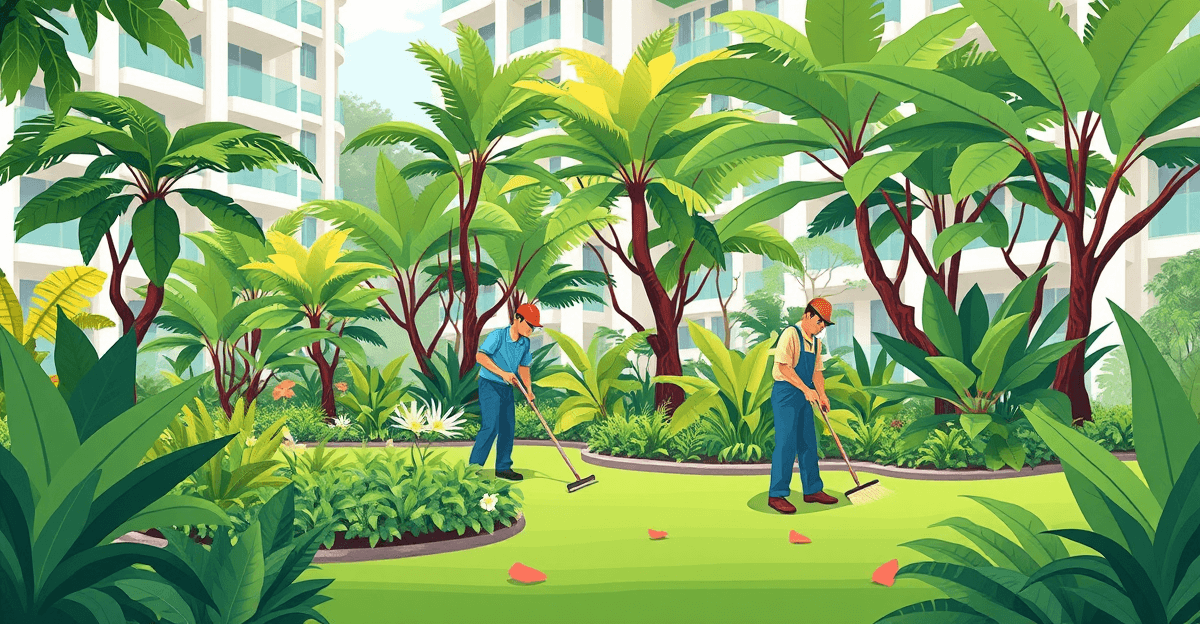
Singapore's condominiums are renowned for their lush, resort-style landscaping. From towering rain trees framing entrance driveways to manicured hedges lining pool decks, the greenery is often the first thing prospective buyers and tenants notice. But maintaining tropical gardens in a dense urban environment — with relentless humidity, heavy rainfall, and year-round heat — demands a structured, knowledgeable approach. This guide breaks down everything condo management committees (MCSTs), property managers, and landscape contractors need to know to keep these green spaces thriving.
Condo Landscaping in Singapore: The Short Version
Effective landscape maintenance for condominiums and MCSTs in Singapore comes down to one principle: match your maintenance frequency to the pace of tropical growth. In practice that means a layered schedule — weekly mowing and litter clearing, fortnightly hedge trimming and weeding, monthly tree and drainage inspections, and quarterly or annual major pruning and soil work. Because plants here grow fast all year round, a contract that defines each task and its frequency will always outperform a vague flat-rate retainer.
Whether you are an MCST evaluating a condominium landscape contractor or a managing agent overseeing the work, the two things that matter most are a clearly scoped schedule and reliable reporting — proof that each visit's tasks were actually completed. The sections below break down the full schedule, plant choices, and pitfalls.
Understanding Singapore's Tropical Climate and Its Impact on Landscaping
Singapore lies approximately one and a half degrees north of the equator. That geographic reality shapes every landscaping decision. Average temperatures range from around 23°C to 32°C throughout the year, relative humidity frequently exceeds 80%, and annual rainfall averages around 2,340 mm. There is no true dry season — only the drier months from February to March and the wetter Northeast Monsoon period from November to January.
This climate creates rapid, aggressive plant growth. Lawns can require mowing every seven to ten days. Shrubs and hedges lose their shape within weeks. Fungal infections spread quickly in the warm, moist air. Any landscape maintenance programme that does not account for this pace of growth will quickly fall behind, leading to overgrown common areas, clogged drains, and unhappy residents.
Still tracking maintenance jobs in spreadsheets and WhatsApp?
Werkks schedules recurring maintenance, keeps photo records of every completed job, and shows live status across all your contractors and staff. Free for 14 days.
Developing a Comprehensive Maintenance Schedule
A well-structured maintenance calendar is the backbone of effective condo landscape management. Most condominiums in Singapore engage landscape contractors on monthly retainer contracts, but the scope and frequency of tasks should be clearly defined.
Weekly Tasks
- •Lawn mowing and edging across all turf areas, including rooftop gardens and ground-level courtyards
- •Litter and debris removal from garden beds, walkways, and water features
- •Inspection of irrigation systems for leaks, blocked emitters, or misaligned sprinkler heads
- •Sweeping of hardscape areas adjacent to planted zones to prevent algae buildup on wet surfaces
Fortnightly Tasks
- •Hedge trimming and topiary shaping for fast-growing species such as Murraya paniculata (Orange Jasmine) and Wrightia religiosa
- •Weeding of planter beds and tree bases, especially important in mulched areas where weed seeds germinate rapidly
- •Fertiliser application to high-visibility flower beds and feature plants
Monthly Tasks
- •Tree canopy inspection for dead branches, signs of disease, or encroachment on building facades and utility lines
- •Pest and disease monitoring with documented reports for the MCST
- •Mulch top-up in garden beds to suppress weeds and retain soil moisture
- •Drainage checks to ensure landscape drains and French drains are clear ahead of heavy rain events
Quarterly and Annual Tasks
- •Major pruning of large trees, ideally carried out by ISA-certified arborists
- •Soil testing and amendment to address nutrient depletion or pH imbalance
- •Replanting of seasonal flower beds to maintain visual freshness
- •Audit of the overall landscape plan against the original design intent
Choosing the Right Plants for Condo Landscapes
Plant selection is one of the most consequential decisions in tropical condo landscaping. The wrong choices lead to excessive maintenance costs, pest problems, and resident complaints. Prioritise species that are hardy, low-maintenance, and well-suited to the specific microclimate of each planting zone.
High-Performing Tropical Species for Singapore Condos
- •Shade trees: Pterocarpus indicus (Angsana), Samanea saman (Rain Tree — for large estates), Peltophorum pterocarpum (Yellow Flame)
- •Palms: Ptychosperma macarthurii (Macarthur Palm), Cyrtostachys renda (Sealing Wax Palm), Dypsis lutescens (Golden Cane Palm)
- •Shrubs and hedges: Ixora cultivars, Heliconia species, Philodendron varieties, Dracaena species
- •Ground covers: Rhoeo spathacea (Oyster Plant), Episcia cupreata, Tradescantia zebrina
- •Lawn turf: Cow grass (Axonopus compressus) for shaded areas, Pearl grass (Zoysia tenuifolia) for ornamental zones, and Philippine grass (Zoysia matrella) for high-traffic areas
Plants to Avoid or Use Cautiously
- •Species prone to heavy fruit drop near walkways and car parks (e.g., certain Ficus species)
- •Plants that attract large bee populations near pool decks and playgrounds
- •Thorny species along jogging paths and children's play areas
- •Invasive species listed on NParks' watch list
Irrigation Management in a Tropical Setting
While Singapore receives abundant rainfall, irrigation remains essential. Rain distribution is uneven — a condo can receive 80 mm of rain in one afternoon and then experience bone-dry conditions for ten days straight. Areas under building overhangs, covered walkways, and dense tree canopies often receive little to no rainfall.
Best Practices for Condo Irrigation
- •Install drip irrigation in planter beds and shrub borders for water efficiency. Drip systems deliver water directly to root zones, reducing waste and discouraging fungal growth on foliage.
- •Use pop-up sprinklers for open lawn areas, programmed to water in the early morning (5:00 AM to 7:00 AM) to minimise evaporation and fungal risk.
- •Integrate rain sensors or soil moisture sensors into the irrigation controller to prevent watering during or immediately after heavy rain. PUB encourages water conservation, and over-watering contributes to root rot.
- •Conduct monthly audits of irrigation coverage to identify dry spots or areas of excessive runoff.
Pest and Disease Management
The tropical climate that makes Singapore's gardens so lush also creates ideal conditions for pests and plant diseases. A proactive integrated pest management (IPM) approach is far more effective — and environmentally responsible — than reactive chemical spraying.
Common Pests in Singapore Condo Gardens
- •Mealy bugs and scale insects on ornamental shrubs and palms
- •Caterpillars defoliating Ixora and other flowering shrubs
- •White flies on Hibiscus and other soft-leaved species
- •Subterranean termites attacking tree root systems and timber landscape structures
Common Diseases
- •Leaf spot and anthracnose caused by fungal pathogens in humid conditions
- •Root rot from waterlogged soils or over-irrigation
- •Algal and moss growth on hardscape surfaces, especially in shaded, north-facing areas
IPM Strategies
- 1.Cultural controls: Ensure proper spacing between plants for air circulation. Avoid overhead irrigation on disease-prone species. Remove fallen leaves and debris promptly.
- 2.Biological controls: Introduce beneficial insects where appropriate. Use Bacillus thuringiensis (Bt) for caterpillar control as a targeted, low-toxicity option.
- 3.Chemical controls as a last resort: When pesticide application is necessary, use NEA-approved products, apply them outside peak resident activity hours, and post advance notices in common areas.
Tree Management and Safety
Large trees are the most valuable — and potentially the most hazardous — elements of any condo landscape. A mature rain tree or Angsana can be worth tens of thousands of dollars in replacement value, but a falling branch during a storm can cause injury, property damage, and significant liability for the MCST.
- •Engage ISA-certified arborists for annual tree risk assessments
- •Maintain crown reduction and deadwood removal on a regular cycle
- •Monitor for signs of root heave that could damage pavements, retaining walls, or underground utilities
- •Ensure compliance with NParks guidelines for heritage trees and conservation areas
- •After major storms, conduct immediate post-event inspections of all large trees on the estate
Budgeting for Landscape Maintenance
Landscape maintenance is typically one of the larger line items in a condo's operating budget. Monthly landscape contracts for Singapore condominiums vary significantly depending on the estate's size, complexity, and quality expectations.
Cost-saving strategies include:
- •Replacing high-maintenance species with hardier alternatives during replanting cycles
- •Investing in automated irrigation to reduce manual watering labour
- •Bundling services such as pest control and arborist work with the primary landscape contractor
- •Planning major works like tree surgery and landscape renovation during the annual budgeting cycle rather than treating them as ad hoc expenses
Working with Landscape Contractors
The relationship between the MCST or property manager and the landscape contractor is crucial. Clear communication, well-defined scopes of work, and regular performance reviews prevent misunderstandings and ensure accountability.
- •Define key performance indicators (KPIs) in the contract, such as lawn height standards, hedge trimming frequency, and response times for urgent issues
- •Conduct monthly joint inspections with the contractor's site supervisor
- •Maintain a landscape defects log with photographic evidence for follow-up
- •Include clauses for seasonal replanting and ad hoc works in the contract to avoid disputes over scope
Frequently Asked Questions
How often should condo lawns be mowed in Singapore?
Singapore's tropical climate drives rapid, year-round grass growth, meaning condo lawns typically need more frequent mowing than in temperate climates. High-visibility areas like main entrances may warrant weekly mowing, while lower-traffic turf can be maintained on a longer cycle. Your landscape contractor can recommend a site-specific schedule based on the turf species and observed growth rates on the estate.
What is the best time to water condo gardens in Singapore?
Early morning between 5:00 AM and 7:00 AM is ideal. This allows foliage to dry before the heat of the day, reducing fungal disease risk while minimising evaporation losses.
How can we reduce landscape maintenance costs without sacrificing quality?
Focus on strategic plant selection — replace high-maintenance ornamentals with hardy, slow-growing native species. Invest in drip irrigation to reduce labour. Consolidate contractor services and negotiate multi-year contracts for better rates.
Are there NParks regulations that affect condo landscaping?
Yes. The Parks and Trees Act protects trees within designated Tree Conservation Areas: any pruning, felling, or works affecting trees in such areas with a girth exceeding 1 metre, measured at half a metre (0.5 m) from the ground, require NParks approval. Heritage Trees — under the separate Heritage Tree Scheme — are a distinct category, typically requiring a girth of at least 5 metres, and attract additional protections. Certain tree species along road frontages may also fall under NParks' jurisdiction.
How do we handle fallen trees or storm damage?
Activate your landscape contractor's emergency response clause immediately. Cordon off the affected area for safety, document the damage with photographs, and notify your insurer. For trees that have fallen onto public roads or neighbouring properties, contact NParks and the relevant town council.
Should condos use organic or chemical fertilisers?
A blended approach works best. Slow-release organic fertilisers improve soil health over time and are ideal for garden beds. Synthetic fertilisers provide quick nutrient boosts for turf and high-demand flowering plants. Always follow application rates to avoid nutrient runoff into waterways.
Sources & References
- 1.National Parks Board (NParks) — Tree Management — Guidelines on tree care, risk assessment, and heritage tree protection
- 2.Parks and Trees Act 2005 — Singapore Statutes Online (AGC) — Statutory protection of trees and works requiring NParks approval
- 3.NParks — Gardening in Singapore — Plant selection and horticultural guidance for the tropical climate
- 4.National Environment Agency (NEA) — Vector Control and Pesticide Use — Approved pest management practices and mosquito breeding prevention
- 5.PUB, Singapore's National Water Agency — Water Conservation — Guidance on efficient irrigation and water use
Maintaining a tropical landscape in a Singapore condominium is an ongoing commitment that directly impacts property values, resident satisfaction, and community pride. With a structured maintenance programme, the right plant palette, and a reliable landscape partner, your condo's gardens can remain a standout feature for years to come.
Frequently Asked Questions
How often should a Singapore condo's landscaping be maintained?
Because Singapore's tropical climate drives rapid, year-round plant growth, most condominiums maintain their landscaping on a layered schedule rather than a single monthly visit. Lawns typically need mowing every seven to ten days, hedges and topiary fortnightly, and tree-canopy inspections, pest monitoring and drainage checks monthly. Major pruning and soil work are handled quarterly or annually. A good condo landscaping contract spells out the frequency of each task rather than just billing a flat monthly retainer.
What should an MCST look for in a condominium landscape contractor in Singapore?
For landscape maintenance of condominiums and MCSTs in Singapore, look for a contractor with experience in dense tropical settings, ISA-certified arborists for large tree work, a clearly scoped maintenance schedule (weekly, fortnightly, monthly, quarterly), documented pest and disease reporting, and proper insurance and worker-safety compliance. Reliable reporting matters as much as the gardening itself — the MCST needs an audit trail showing the work was actually done.
How is condo landscaping in Singapore different from a private garden?
Condo landscaping in Singapore operates at a larger scale and across shared spaces, so it must balance aesthetics with safety, drainage, and resident expectations. Fast equatorial growth means overgrowth, clogged drains and fungal disease appear quickly if visits lapse. It also involves accountability to an MCST or managing agent, structured reporting, and coordination with other building maintenance — which is why many managing agents track landscaping alongside their other recurring maintenance schedules.
Core compliance reading: What Is the BMSMA? MCST Rules, Duties and Penalties — the Building Maintenance and Strata Management Act guide every Singapore building manager should know.
About the author
Mervin Tan
Founder, Werkks
Mervin Tan is the founder of Werkks and a software engineer based in Singapore. He builds maintenance management software used by Singapore facility teams, and writes practical guides on BCA, SCDF, PUB and BMSMA compliance for building managers and MCST councils. Werkks is built by Adaptels Pte. Ltd., Singapore.
Keep your maintenance records inspection-ready
Schedule recurring inspections, collect photo proof of completed work, and keep an audit trail of every job — free for 14 days. No credit card required.
Start Free TrialNo credit card14-day trialCancel anytime
Related Articles
building-maintenance
Timber Deck Maintenance: Tropical Weather Protection
Timber deck maintenance guide for Singapore facility managers and MCSTs — protect decks from humidity, UV, and rot with practical tropical-climate schedules.
property-managementOutsourcing vs In-House Maintenance: Cost Comparison
Outsourcing vs in-house maintenance cost comparison for Singapore facilities managers. Compare manpower, compliance, and overhead costs with real 2026 benchmarks.
building-maintenanceBBQ Pit and Function Room Maintenance for Condos
A practical guide to BBQ pit and function room maintenance for Singapore condos, covering SCDF rules, MCST duties, cleaning schedules, and booking systems.