property-management9Mervin Tan
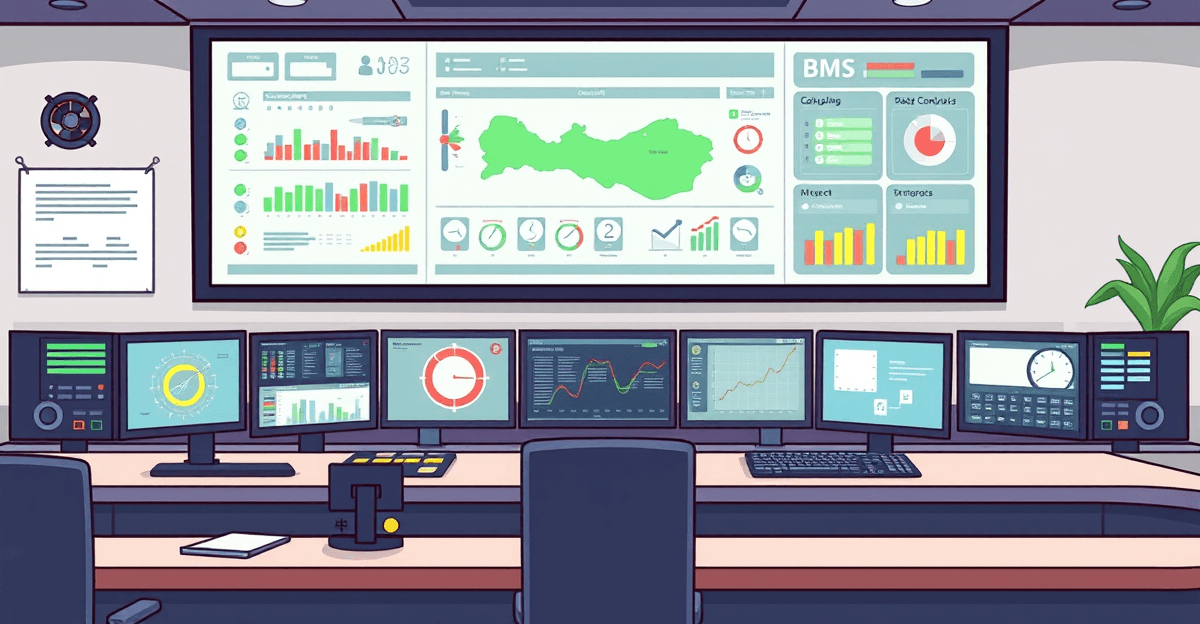
I once walked into a 20-year-old commercial building in Toa Payoh where the building manager was literally walking floor by floor every morning to check if the aircon was running properly. No central monitoring, no automated alerts, nothing. When a chiller tripped on a Saturday night, nobody knew until Monday morning when tenants showed up to a building that felt like a sauna.
That's what life looks like without a BMS. And honestly, even some buildings that have a BMS aren't much better off — because they picked the wrong system, locked themselves into a vendor they can't escape, or never bothered to configure it properly.
Choosing the right building management system is one of the most consequential decisions a facility manager or MCST council can make. Get it right, and you're looking at 15–30% energy savings, fewer equipment breakdowns, and compliance that practically takes care of itself. Get it wrong, and you've spent hundreds of thousands on a system that creates more headaches than it solves.
Key Takeaway: A building management system in Singapore must handle tropical climate loads (year-round cooling demand), integrate with fire life safety systems per SCDF codes, and support BCA energy reporting. Prioritise open-protocol systems with local vendor support over proprietary platforms that lock you into expensive service contracts.
What a BMS Does and Why Singapore Buildings Need One
A BMS is a centralised platform that monitors and controls your building's mechanical, electrical, and plumbing systems. In Singapore, that means primarily ACMV (air-conditioning and mechanical ventilation), lighting, fire protection, lift monitoring, and water systems.
Our tropical climate creates demands you don't see in temperate countries. Buildings run cooling systems 12–16 hours daily, all year round. Without intelligent BMS control, your chiller plant alone can eat up 40–60% of total building energy consumption. A properly configured BMS optimises chiller sequencing, adjusts AHU schedules based on actual occupancy, and flags performance degradation before it becomes a costly breakdown.
For MCSTs, a BMS also gives you the data backbone for tracking maintenance KPIs and presenting hard numbers to subsidiary proprietors during AGMs. Instead of "we think the aircon is running fine," you can show actual performance data.
The Single Most Important Decision: Open vs. Proprietary
This is where I've seen the most expensive mistakes. The biggest decision isn't which brand to buy — it's whether to go with an open-protocol system (BACnet, Modbus, LON) or a proprietary one.
Open systems let you:
- •Mix and match equipment from different manufacturers
- •Switch maintenance vendors without ripping out the entire platform
- •Connect with third-party analytics and scheduling tools down the road
Proprietary systems from Honeywell, Siemens, and Johnson Controls offer tighter integration within their own ecosystem, but here's what happens in practice: five years down the line, your maintenance contract comes up for renewal, and the vendor knows you can't go to anyone else. I've seen maintenance fees jump 40% at renewal because the building had no alternatives.
For Singapore buildings with 20–30 year life cycles, open protocols give you significantly better flexibility. I'd pick an open system every time unless you have a very specific reason not to.
Scalability and What to Integrate
Think about what you need now and what you'll want in five years:
Critical integrations:
- •ACMV / Chiller Plant — Direct DDC control. This is your biggest energy consumer.
- •Fire Alarm (SCDF-compliant) — Monitoring and override. Non-negotiable for commercial buildings.
High priority:
- •Lift Monitoring — Status and fault alerts
- •Lighting Control — Schedule and occupancy-based
Medium priority:
- •Water / Pumping — Monitoring and alarms
- •Access Control — Event logging
Growing importance:
- •EV Charging — Load management. This is coming faster than most building managers expect.
Local Support Is Not Optional
In Singapore's compact geography, your BMS vendor should guarantee 2–4 hour on-site response for critical faults. Ask them straight: how many engineers do you have in Singapore? Do you subcontract tier-2 support?
I had a client whose BMS vendor had beautiful features but their nearest support team was in Malaysia. When the chiller plant controller crashed at 2 AM, they couldn't get anyone on-site until noon the next day. Twelve hours of a building with no cooling in Singapore is not acceptable.
Still tracking building management system jobs in spreadsheets and WhatsApp?
Werkks schedules recurring maintenance, keeps photo records of every completed job, and shows live status across all your contractors and staff. Free for 14 days.
Compliance Requirements You Can't Ignore
BCA Green Mark and Energy Reporting
Buildings over 15,000 m2 GFA must submit annual energy data to BCA. A BMS with sub-metering capabilities makes this straightforward. Without one, you're manually reading meters and compiling spreadsheets — error-prone and time-consuming.
For Green Mark certification under GM:2021, a BMS earns you points across multiple categories. Buildings targeting Gold and above essentially need BMS-level monitoring as a baseline. See our full Green Mark certification guide for the details.
SCDF Fire Safety Integration
This is critical and non-negotiable. Your BMS must interface with fire life safety systems but never override them. Specifically:
- •Smoke detection signals must trigger ACMV shutdown in affected zones
- •Stairwell pressurisation fans must activate independently of BMS control
- •Fire command centre displays must work even if the BMS goes offline
I've seen a BMS commissioning where the integrator accidentally tied the stairwell pressurisation fans to BMS control. During a fire drill, the BMS software crashed and the fans didn't activate. That's the kind of mistake that gets people hurt. Make sure your integration is done properly and tested thoroughly. For more on SCDF requirements, see our guide on fire safety maintenance in Singapore.
BMSMA Obligations
Under the BMSMA, MCSTs must maintain common property in good repair. A BMS gives you documented evidence of proactive maintenance — invaluable during disputes and audits, and useful for transparent reporting to subsidiary proprietors on spending and equipment condition.
Realistic Costs for Singapore
New installation (capital expenditure):
- •Small commercial (under 10,000 m2): $80,000–$200,000
- •Mid-size commercial/condo (10,000–50,000 m2): $200,000–$600,000
- •Large mixed-use/campus: $500,000–$2,000,000+
Annual maintenance:
- •Typically 8–12% of installation cost per year
- •Covers software updates, controller calibration, sensor replacement
Cloud-based alternatives:
- •Emerging options from $2,000–$8,000/month
- •Lower upfront cost, good for smaller estates or retrofits
- •Trade-off: less customisation, needs reliable internet
When budgeting, factor in integration costs with existing equipment. Retrofitting a BMS onto older chillers or AHUs without DDC-ready controllers can add 20–40% to the base cost. This catches a lot of building owners by surprise.
For contractors quoting BMS-related maintenance work, our guide on how to price maintenance contracts in Singapore covers the fundamentals.
Getting It Implemented Right
Phase 1: Audit and Spec
Before talking to vendors, document your building's existing MEP systems, control points, and what you want to integrate. A thorough audit upfront prevents scope creep and cost overruns. I've seen installation budgets blow out by 50% because nobody mapped the existing systems properly before starting.
Phase 2: Vendor Evaluation
Request demonstrations using your building's actual system architecture. Generic demos look great in a meeting room but don't tell you how the platform handles Singapore-specific scenarios — like humidity-based fresh air control or NEA-mandated indoor air quality monitoring.
Phase 3: Installation and Commissioning
Allow 3–6 months for a mid-size installation. Commission during actual operating conditions — not during a building shutdown. You need to validate performance under real load, with real tenants, in real Singapore heat.
Phase 4: Don't Set and Forget
A BMS needs ongoing optimisation. Schedule quarterly reviews of control sequences and setpoints. After every major tenant fit-out or equipment replacement, re-check your programming. BCA recommends periodic recommissioning, and for good reason — drift is real and constant.
Werkks simplifies job scheduling and invoicing for Singapore facilities managers, making it easier to coordinate the ongoing maintenance tasks a BMS generates — from filter replacements flagged by pressure sensors to chiller inspections triggered by performance drift.
Connecting BMS to Maintenance Operations
The real payoff comes when your BMS talks to your maintenance workflow. When a fault triggers an automatic work order, response times drop and nothing slips through the cracks.
Modern platforms support this through APIs and webhooks. If your systems need custom integration, firms like Adaptels specialise in building software bridges between BMS platforms and operational tools for Singapore SMEs.
Building a preventive maintenance schedule around BMS data — rather than fixed calendar intervals — can reduce unnecessary servicing by 20–30% while catching genuine issues earlier. That's the sweet spot: maintaining less often but more effectively.
Vendor Landscape in Singapore
The market breaks down into three categories:
Enterprise vendors (Honeywell, Siemens, Johnson Controls, Schneider Electric) — Full-suite solutions, strong local presence, higher cost. Good for large commercial buildings with complex requirements.
Open framework integrators (Tridium/Niagara-based) — Popular for retrofits and multi-vendor sites. Flexible, often better value, but you need a good local integrator.
Cloud-native platforms — Lower cost, mobile-first, suited for smaller portfolios. Growing fast in the Singapore market.
Pick based on your building's complexity, budget, and long-term strategy — not on brand name alone.
Sources
- 1.BCA Green Mark Certification Scheme — Singapore's green building rating framework and energy performance requirements
- 2.SCDF Fire Safety Act and Regulations — Fire life safety system requirements for commercial buildings
- 3.Building Maintenance and Strata Management Act (BMSMA) — Legal obligations for MCSTs managing common property
- 4.BCA Building Energy Submission System — Mandatory energy reporting requirements for large buildings
- 5.Singapore Standard SS 553: Air-conditioning and Mechanical Ventilation — Technical standard governing ACMV design and operation in Singapore buildings
Frequently Asked Questions
How much does a building management system cost in Singapore?
A BMS for a mid-size commercial building in Singapore typically costs $150,000–$500,000 for installation, with annual maintenance fees of $15,000–$50,000. Costs vary based on building size, number of integration points, and whether you're retrofitting an older system or installing fresh. HDB-scale town councils and smaller MCSTs can explore cloud-based BMS options starting from $2,000–$5,000 per month.
Is a BMS mandatory for buildings in Singapore?
While BCA does not mandate BMS installation for all buildings, the Green Mark certification scheme awards points for BMS-enabled energy monitoring and optimisation. Buildings above 15,000 m² of gross floor area must submit annual energy consumption data under the Building Control (Environmental Sustainability) Regulations, which is significantly easier with a BMS. SCDF also requires fire alarm systems to integrate with building-wide monitoring in many commercial properties.
Can a BMS integrate with maintenance scheduling software?
Yes. Modern BMS platforms offer open APIs and BACnet/Modbus protocols that connect with maintenance management tools. When a BMS detects a fault—such as an AHU filter pressure drop or chiller performance deviation—it can automatically trigger a work order in your scheduling system, ensuring faster response times and better documentation for MCST reporting.
Core compliance reading: What Is the BMSMA? MCST Rules, Duties and Penalties — the Building Maintenance and Strata Management Act guide every Singapore building manager should know.
About the author
Mervin Tan
Founder, Werkks
Mervin Tan is the founder of Werkks and a software engineer based in Singapore. He builds maintenance management software used by Singapore facility teams, and writes practical guides on BCA, SCDF, PUB and BMSMA compliance for building managers and MCST councils. Werkks is built by Adaptels Pte. Ltd., Singapore.
building management systemBMS Singaporefacility managementproperty managementsmart buildingMCST
Keep your maintenance records inspection-ready
Schedule recurring inspections, collect photo proof of completed work, and keep an audit trail of every job — free for 14 days. No credit card required.
Start Free TrialNo credit card14-day trialCancel anytime
Related Articles
property-management
Outsourcing vs In-House Maintenance: Cost Comparison
Outsourcing vs in-house maintenance cost comparison for Singapore facilities managers. Compare manpower, compliance, and overhead costs with real 2026 benchmarks.
property-managementManaging Multiple Properties in Singapore
A practical guide to managing multiple properties in Singapore: scheduling, compliance with BCA/SCDF rules, MCST obligations, and tools facility managers rely on.
property-managementPreparing Condo for En Bloc Sale: Maintenance Guide
A practical maintenance guide to preparing your condo for en bloc sale in Singapore — covering MCST obligations, BCA/SCDF compliance, and record-keeping for facility managers.