building-maintenance9Mervin Tan
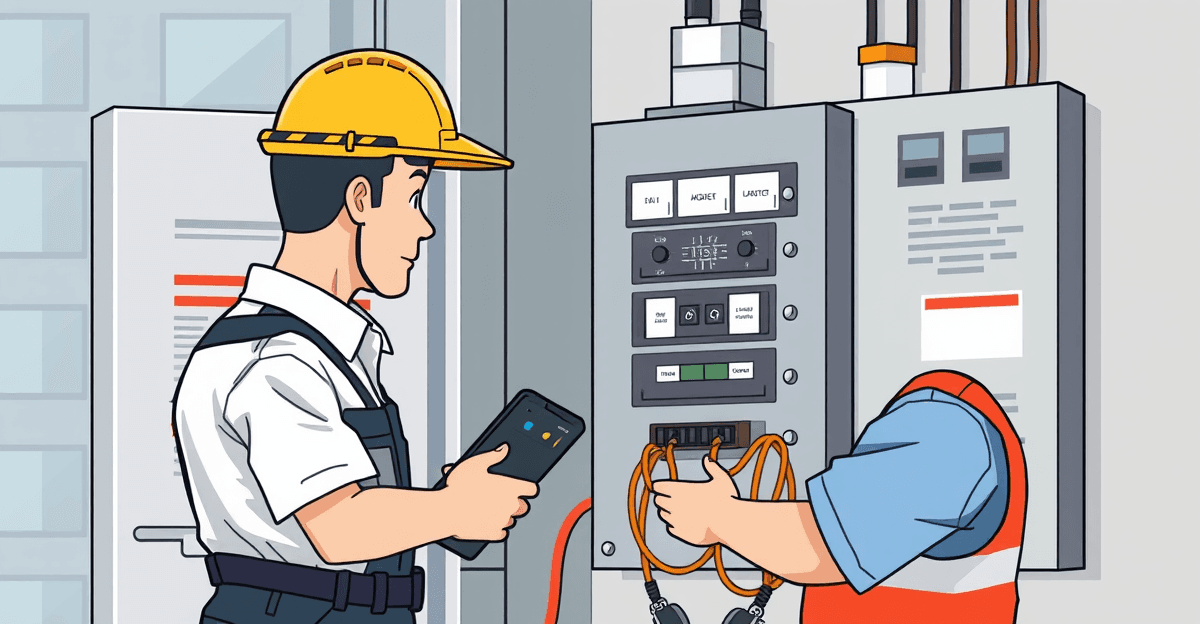
Key Takeaway: Commercial buildings in Singapore must maintain electrical installations under the Electricity Act, with mandatory inspections by a Licensed Electrical Worker (LEW) every five years for installations above 45 kVA. In practice, annual inspections and quarterly preventive maintenance are the standard for responsible building management — and non-compliance can result in fines up to S$10,000 per offence.
When an electrical system fails in a commercial building, everything goes down — lifts, aircon, lighting, access control, fire safety. I've seen a single failed contactor in a main switchboard black out an entire office tower in Tanjong Pagar for three hours during a weekday afternoon. The tenant complaints alone kept the building manager busy for a week.
Electrical maintenance isn't something you can defer or cut corners on. The Electricity Act, EMA, and SCDF fire safety requirements all make that clear — and the fines are the least of your worries if something serious happens.
The Regulatory Framework
Singapore's electrical safety regime for commercial buildings is governed by several overlapping regulations. Understanding which ones apply to your building is the first step toward compliance.
The Electricity Act and EMA Regulations
The Electricity Act (Cap. 89A) is the primary legislation governing electrical installations in Singapore. Under this Act, all electrical installations above 45 kVA — which includes virtually every commercial building — must be registered with the Energy Market Authority. Building owners must ensure that:
- •A Licensed Electrical Worker (LEW) is appointed to take charge of the installation
- •The installation is inspected and tested at intervals not exceeding five years
- •Any modification, extension, or major repair is carried out or supervised by an LEW
- •An Electrical Installation Licence is maintained and kept current
Failure to comply can result in fines of up to S$10,000, and in serious cases, prosecution under the Act.
SCDF Fire Safety Requirements
Electrical faults remain one of the leading causes of building fires in Singapore. The SCDF Fire Code requires commercial buildings to maintain electrical systems that support fire safety, including:
- •Emergency lighting and exit signage
- •Fire alarm system power supplies
- •Fire pump electrical connections
- •Smoke control and pressurisation system circuits
These systems are inspected during the annual fire safety inspection that all commercial buildings must undergo. Electrical deficiencies flagged during an SCDF inspection can result in Fire Safety Orders that demand immediate rectification.
BMSMA Obligations for Strata-Titled Buildings
For strata-titled commercial properties, the Building Maintenance and Strata Management Act places maintenance responsibility for common property electrical systems squarely on the MCST. This includes main switchboards, rising mains, distribution boards in common areas, and the building's earth system. MCSTs must budget for these obligations in their annual maintenance plans and sinking fund projections.
What Does a Proper Electrical Preventive Maintenance Programme Look Like?
A reactive approach to electrical maintenance — fixing things only when they break — is both dangerous and expensive. A structured preventive maintenance programme reduces the risk of unplanned outages, extends equipment lifespan, and keeps your building on the right side of regulations.
Recommended Maintenance Frequencies
| Component | Inspection Frequency | Typical Scope |
|---|---|---|
| Main switchboard | Quarterly | Visual check, thermal imaging, tightness of connections |
| Distribution boards | Semi-annually | Visual inspection, circuit breaker testing |
| Transformer | Annually | Oil sampling, insulation resistance testing, load checks |
| Emergency lighting | Monthly | Functional test (duration test annually) |
| Earth system | Annually | Earth resistance measurement |
| Cable risers | Annually | Visual check for damage, overheating, water ingress |
| Backup generator | Monthly (run test), annually (full load) | Fuel, battery, ATS functionality |
These frequencies align with SS 638 (Code of Practice for Electrical Installations) and are widely adopted across Singapore's commercial building sector.
Thermal Imaging: A Non-Negotiable
Infrared thermography is one of the most effective tools for electrical preventive maintenance. It detects hotspots — loose connections, overloaded circuits, deteriorating components — before they fail. In Singapore's tropical climate, where ambient temperatures already run high, thermal stress on electrical components is elevated year-round.
Best practice is to conduct thermal imaging surveys of main switchboards and distribution boards at least annually. Many facility managers schedule these during their mid-year building maintenance checklist review to catch issues before the peak cooling-load months.
Insulation Resistance Testing
Singapore's high humidity — averaging 84% — accelerates insulation degradation. Insulation resistance testing (using a megger) should be performed annually on major circuits and whenever equipment has been exposed to water ingress. A reading below 1 MΩ on a 230V circuit is a red flag that demands immediate investigation.
Still tracking electrical maintenance jobs in spreadsheets and WhatsApp?
Werkks schedules recurring maintenance, keeps photo records of every completed job, and shows live status across all your contractors and staff. Free for 14 days.
Common Electrical Maintenance Pitfalls in Singapore Commercial Buildings
Overloaded Circuits from Tenant Modifications
Tenant fit-outs are a frequent source of electrical problems. New tenants add server rooms, high-powered kitchen equipment, or supplementary air conditioning without assessing the capacity of existing circuits. Facility managers should enforce an electrical loading assessment — conducted by an LEW — before approving any tenant renovation that involves electrical work.
Neglecting the Backup Generator
Backup generators are often tested under no-load or light-load conditions, which does not reveal real-world performance issues. Annual full-load bank testing is essential. In a power outage, a generator that cannot handle the actual building load is worse than no generator at all — because it creates a false sense of security while fire safety systems and lifts remain inoperative.
Deferred Maintenance on Ageing Installations
Many commercial buildings in Singapore are 20–30 years old, and their original electrical installations are reaching end-of-life. Circuit breakers that have never been maintained may fail to trip during a fault. Ageing cables develop insulation breakdown. Building owners should plan for phased upgrades rather than waiting for catastrophic failure. If your building's electrical installation is over 15 years old, discuss a condition assessment with your LEW.
How Much Does Commercial Electrical Maintenance Cost in Singapore?
The cost of a comprehensive electrical preventive maintenance contract for a mid-sized commercial building (10,000–20,000 sq ft) in Singapore typically ranges from S$8,000 to S$25,000 per year, depending on the complexity of the installation, number of distribution boards, and whether the building has a transformer substation.
Key cost factors include:
- •Number of electrical rooms and distribution boards — more points of inspection means higher labour hours
- •Age of the installation — older systems require more frequent attention and are more likely to need parts replacement
- •Presence of a substation — buildings with their own HT/LV substation require specialised LEW oversight and transformer maintenance
- •Emergency and fire safety system integration — additional testing and certification requirements
When evaluating quotes, compare scope rather than price alone. A cheaper contract that omits thermal imaging or insulation resistance testing is a false economy. For guidance on evaluating contractor quotes, see our guide on how to quote maintenance jobs in Singapore.
Choosing the Right Electrical Maintenance Contractor
Not all electrical contractors are equal. When selecting a contractor for your commercial building, verify:
- 1.Valid LEW licence — check with EMA directly
- 2.BizSAFE Level 3 certification (minimum) — ensures workplace safety management
- 3.Experience with commercial installations — residential electricians may lack the expertise for complex commercial systems
- 4.Proper documentation practices — your contractor should provide detailed test reports, defect logs, and compliance certificates after every maintenance visit
- 5.Responsiveness — electrical emergencies require fast response times, ideally under two hours for critical faults
For facility managers juggling multiple contractors and service schedules, Werkks simplifies job scheduling and invoicing so that nothing falls through the cracks — from routine quarterly inspections to emergency call-outs. Having a centralised system also makes it straightforward to maintain the audit trail that EMA and SCDF inspectors expect to see.
Building a Long-Term Electrical Maintenance Strategy
Electrical maintenance is not a one-off task — it is a continuous programme that should be integrated into your building's overall maintenance strategy. Effective facility managers track electrical maintenance as a key performance indicator, monitoring metrics like mean time between failures, inspection pass rates, and corrective action closure times. If you are setting up a KPI framework, our guide on maintenance KPIs for Singapore facility managers covers the metrics that matter most.
For building owners looking to digitise their maintenance operations — from scheduling electrical inspections to managing contractor invoices — platforms like Werkks and custom-built solutions from Adaptels can help reduce administrative overhead and improve compliance tracking.
The bottom line: invest in preventive electrical maintenance, stay current with your LEW inspections, and treat compliance as the floor rather than the ceiling. Your tenants, insurers, and regulators will all thank you for it.
Sources
- 1.Energy Market Authority — Electricity Act and Regulations
- 2.Singapore Civil Defence Force — Fire Code and Fire Safety Requirements
- 3.Building and Construction Authority — Building Maintenance
- 4.Singapore Statutes Online — Building Maintenance and Strata Management Act
- 5.Ministry of Manpower — Workplace Safety and Health (BizSAFE)
Frequently Asked Questions
How often must commercial buildings in Singapore conduct electrical inspections?
Under the Electricity Act, electrical installations in commercial buildings must be inspected and tested by a Licensed Electrical Worker (LEW) at least once every five years for installations above 45 kVA. However, most facility managers conduct annual inspections and quarterly visual checks as part of preventive maintenance best practices. High-risk installations such as transformer rooms and main switchboards may require more frequent attention.
Who is legally responsible for electrical maintenance in a strata-titled commercial building?
Under the Building Maintenance and Strata Management Act (BMSMA), the Management Corporation Strata Title (MCST) is responsible for maintaining common property electrical systems, including main switchboards, emergency lighting, and common area wiring. Individual unit owners are responsible for electrical installations within their own lots. The MCST must appoint a Licensed Electrical Worker for any work on the building's electrical installation.
What qualifications must an electrical maintenance contractor have in Singapore?
Electrical maintenance contractors in Singapore must hold a valid Electrical Worker licence issued by the Energy Market Authority (EMA). For installations above 45 kVA — which covers most commercial buildings — a Licensed Electrical Worker (LEW) must supervise all work. Contractors should also be BizSAFE Level 3 certified at minimum. Always verify your contractor's licence status with EMA before engagement.
Core compliance reading: What Is the BMSMA? MCST Rules, Duties and Penalties — the Building Maintenance and Strata Management Act guide every Singapore building manager should know.
About the author
Mervin Tan
Founder, Werkks
Mervin Tan is the founder of Werkks and a software engineer based in Singapore. He builds maintenance management software used by Singapore facility teams, and writes practical guides on BCA, SCDF, PUB and BMSMA compliance for building managers and MCST councils. Werkks is built by Adaptels Pte. Ltd., Singapore.
electrical maintenancecommercial building maintenanceSingapore BCA compliancelicensed electrical workerpreventive maintenancefire safety
Keep your maintenance records inspection-ready
Schedule recurring inspections, collect photo proof of completed work, and keep an audit trail of every job — free for 14 days. No credit card required.
Start Free TrialNo credit card14-day trialCancel anytime
Related Articles
building-maintenance
Timber Deck Maintenance: Tropical Weather Protection
Timber deck maintenance guide for Singapore facility managers and MCSTs — protect decks from humidity, UV, and rot with practical tropical-climate schedules.
building-maintenanceBBQ Pit and Function Room Maintenance for Condos
A practical guide to BBQ pit and function room maintenance for Singapore condos, covering SCDF rules, MCST duties, cleaning schedules, and booking systems.
building-maintenanceCar Park Deck Coating Maintenance for Singapore
Complete guide to car park deck coating maintenance for Singapore buildings. Learn costs, BCA compliance, inspection schedules, and how facility managers extend deck life.