compliance8Mervin Tan
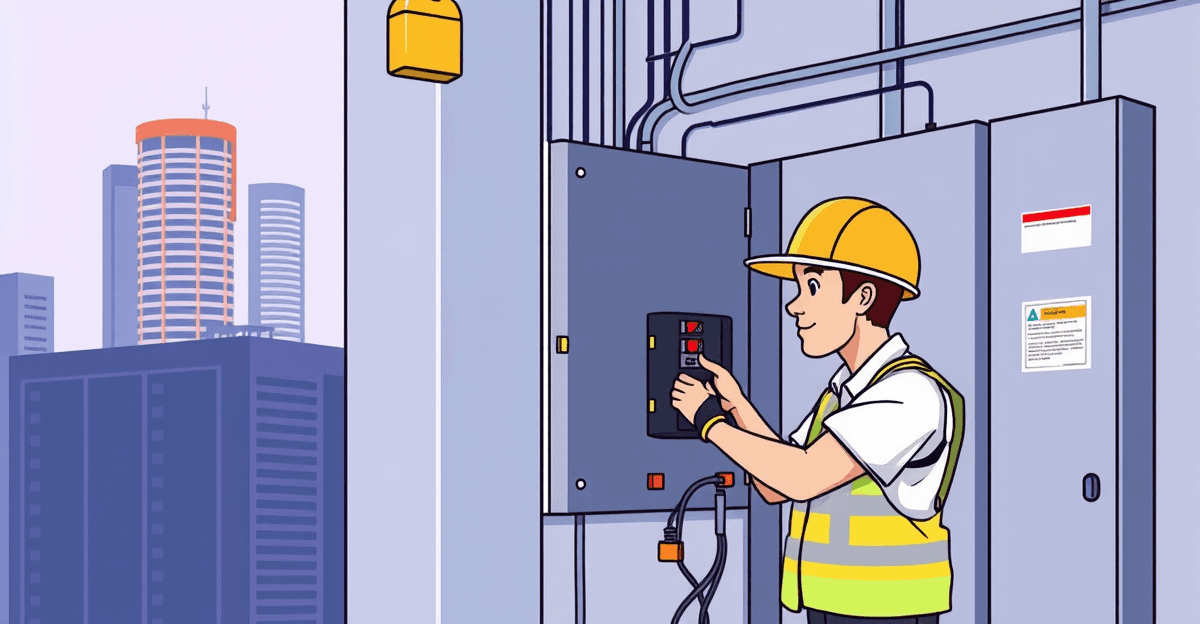
A condo in Hougang had their main switchboard trip three times in two months. Turns out they hadn't had a proper electrical inspection in seven years — two years past the mandatory five-year cycle. The LEW found corroded bus bars, loose connections, and cable insulation that had degraded to the point where it was a fire risk. The remediation cost four times what the inspection would have cost if it had been done on schedule.
TL;DR: Complete guide to electrical inspection requirements for Singapore buildings under EMA regulations. MCST compliance checklist, inspection schedules, and contractor management tips.
EMA penalties can reach SGD 10,000 for non-compliance, but the real cost of skipping inspections is what happens when something fails. Here's what facilities managers and MCST committees need to know.
Why Electrical Inspections Matter in Singapore's Climate
Singapore's tropical environment—high humidity, salt air near coastal areas, and year-round heat—accelerates corrosion and electrical degradation. Unlike temperate climates, electrical insulation, cabling, and switchboards deteriorate faster. Regular inspections catch problems before they become safety hazards or cause fires.
Between 2019 and 2024, the Singapore Civil Defence Force (SCDF) responded to an average of 1,200+ electrical fires annually. Most were preventable through proper maintenance and timely inspection. For MCST managers, this isn't abstract compliance—it's about protecting lives in your building.
Understanding Singapore's Electrical Inspection Framework
The Energy Market Authority (EMA) Role
The EMA regulates electrical safety in Singapore through the Electrical Safety Code of Practice. While the EMA primarily focuses on licensed electrical contractors and large commercial installations, their standards cascade down to building-level compliance through the BCA. If your installation exceeds the licensing thresholds, see our guide to the EMA electrical installation licence — cost, renewal and LEW rules.
BCA and Building Code Requirements
The Building and Construction Authority (BCA) integrates electrical safety into the Singapore Building Code (SBC). For existing buildings, electrical installations must meet standards outlined in:
- •Code of Practice for Electrical Installations (CP5) — the baseline standard for all electrical work
- •Fire Code (FC) — governs fire detection, alarm systems, and emergency lighting
- •Green Mark standards — increasingly required for commercial buildings
MCST committees must ensure their buildings comply with these codes, even if the building was constructed before current standards were introduced.
The BMSMA Act and MCST Responsibilities
The Building Maintenance and Strata Management Act (BMSMA) places clear responsibility on MCSTCs to maintain common property safely. This includes electrical installations. Under Section 32 of the BMSMA, MCSTCs must:
- 1.Maintain all common electrical systems in good condition
- 2.Conduct regular inspections and keep records
- 3.Ensure repairs are executed promptly by qualified contractors
- 4.Inform residents of electrical hazards affecting safety
Failure to do so can result in MCSTCs being personally liable for accidents or injuries.
Still tracking electrical-safety jobs in spreadsheets and WhatsApp?
Werkks schedules recurring maintenance, keeps photo records of every completed job, and shows live status across all your contractors and staff. Free for 14 days.
Electrical Inspection Schedules by Installation Type
Not all electrical installations require the same inspection frequency. Here's the practical breakdown:
Standard Electrical Installations (5-Year Cycle)
General wiring, distribution boards, and standard outlets in residential units and common areas require inspection once every 5 years. This is the baseline for most buildings.
What's inspected:
- •Condition of cables and conduits
- •Grounding and earthing systems
- •Switchboard condition and labeling
- •Plug sockets and switches
- •Compliance with CP5 standards
High-Risk Systems (Annual Inspection)
Certain installations are critical to safety and require annual inspection:
- •Emergency lighting — must function during power loss
- •Fire alarm and detection systems — life-safety critical
- •Lift electrical systems — covered under separate MOM regulations
- •Water pump electrical controls — essential for supply
- •Generator and backup power systems — business continuity
- •Fire safety systems — including fire-rated cables and emergency circuits
SCDF mandates that fire safety electrical systems are tested and certified annually. For buildings with lifts, the Ministry of Manpower (MOM) requires separate annual electrical inspection of lift systems.
Specialized Installations (As Required)
Some installations need inspection based on risk assessment:
- •Air conditioning systems — every 2-3 years for large central systems
- •Electrical heating/cooking equipment — every 3-5 years in commercial kitchens
- •Solar panel installations — annually in tropical climates due to degradation risk
- •Data centers or server rooms — annually or per vendor requirements
LEW Inspection Checklist for MCST Managers
Use this practical LEW inspection checklist to stay compliant. Here's what you need to implement immediately when arranging a Licensed Electrical Worker (LEW) inspection:
1. Create a Master Electrical Inspection Register
Document every electrical installation in your building by category:
- •Location (e.g., "Level 5 corridor," "Pump room," "Lift shaft 1A")
- •Installation type (e.g., "emergency lighting," "distribution board")
- •Last inspection date
- •Next due date
- •Licensed Electrical Worker (LEW) name and registration number
- •Findings and remediation status
2. Hire a Licensed Electrical Contractor (LEC)
This is non-negotiable. Only Licensed Electrical Contractors registered with the EMA can conduct official inspections. Verify:
- •Valid EMA registration certificate
- •Active practising license (not expired)
- •Professional indemnity insurance
- •References from other MCSTCs or building owners
When you engage a contractor, Werkks simplifies job scheduling and invoicing for Singapore facilities managers—you can track inspection dates, set automatic reminders, and invoice contractors directly through the platform, ensuring no inspections slip through the cracks.
3. Schedule Inspections 6-8 Weeks in Advance
Don't wait until the due date. Schedule the next cycle 2 months ahead to:
- •Avoid last-minute rush and high contractor costs
- •Allow time for remediation if defects are found
- •Minimize disruption to residents
- •Plan budget allocation
4. Document Every Finding
When the LEW submits their inspection report, create an action log:
- •Defect description — what was found
- •Risk level — critical, major, or minor
- •Remediation deadline — based on risk
- •Responsible party — contractor or in-house team
- •Completion date and sign-off
Critical defects (electrical hazards, exposed wiring, faulty earthing) must be remedied within 7-14 days. Major defects within 30 days. Minor defects within 90 days.
5. Maintain Records for 7 Years Minimum
The BCA expects MCSTCs to produce inspection records on demand. Non-compliance investigations often hinge on paperwork. Keep:
- •Original inspection reports (signed by LEW)
- •Photographs of major work areas
- •Contractor invoices and credentials
- •Remediation records and certifications
- •MCST meeting minutes discussing electrical safety
Common Electrical Defects Found in Singapore Buildings
Understanding what inspectors look for helps you spot problems early:
Corrosion and Rust
Tropical humidity causes switchboards, cable trays, and outdoor conduits to corrode rapidly. This is the single most common defect in Singapore buildings. Annual visual checks can identify early-stage corrosion before it becomes dangerous.
Inadequate Earthing
Faulty or missing earth connections are serious hazards. Inspectors test earthing resistance with specialized equipment. Many older buildings don't meet current earthing standards—remediation can be costly but is non-negotiable.
Overloaded Circuits
Common areas with added appliances (new water dispensers, additional lighting) sometimes exceed original circuit capacity. This causes breakers to trip frequently or creates fire risk if breakers are disabled.
Damaged Insulation
Rodents, physical damage, or age cause cable insulation to crack. This is particularly common in plant rooms, roof areas, and cable ducts. Even small damage can create electrocution or fire risk.
Non-Compliant Modifications
Residents sometimes alter electrical wiring in their units without permits (e.g., adding outlets, upgrading circuits). While this is the unit owner's responsibility, MCSTCs should conduct periodic spot checks in common areas to identify dangerous DIY work affecting shared systems.
Expired Fire Safety Certifications
Emergency lighting and fire-rated cables have service lives. Systems installed 10-15 years ago may no longer meet standards and require replacement, not just repair.
Cost Management and Budgeting
Electrical inspection and remediation costs vary widely:
- •Standard 5-year inspection — SGD 800–1,500 per inspection for a 300-unit residential block (approximately SGD 2.50–5 per unit)
- •Annual fire safety system inspection — SGD 1,500–2,500 depending on system complexity
- •Emergency remediation (critical defects) — SGD 2,000–10,000+ depending on work scope
- •Major upgrades (e.g., earthing system replacement) — SGD 10,000–50,000+
For MCSTCs, build an electrical maintenance reserve fund of SGD 2–4 per unit per month (for a 300-unit block: SGD 600–1,200 monthly). This covers planned inspections and anticipated remediation.
Working with Contractors: Practical Tips
Setting Clear Expectations
Provide contractors with:
- •A list of all installations to inspect (don't rely on them to find everything)
- •Access schedules (especially if units need entry)
- •Any known problem areas from previous inspections
- •Timeline for report delivery (typically 5-7 working days)
Verifying LEW Credentials
Before work starts:
- •Check the contractor's registration on the EMA website (search the Licensed Electrical Worker Registry)
- •Request proof that the specific LEW assigned to your job is listed
- •Verify their professional indemnity insurance is current
Review Reports Thoroughly
Don't accept vague findings. Reports should specify:
- •Exact location of defects (not just "distribution board found faulty")
- •Nature of defect (corroded terminals, loose connections, etc.)
- •Risk assessment (how urgent is remediation?)
- •Recommended remediation method and estimated cost
- •Timeline for follow-up inspection after repairs
Track Progress
Use digital tools to monitor remediation:
- •Assign contractor work orders with due dates
- •Track material orders and delivery dates
- •Schedule follow-up inspections after major work
- •Maintain photographic evidence of before/after conditions
Regulatory Changes and Staying Updated
Singapore's electrical safety standards evolve. Key sources for updates:
- •EMA website (www.ema.gov.sg) — publishes updated codes and contractor licensing information
- •BCA Building Information Model (BIM) — includes latest standards for new work and renovations
- •SCDF fire safety bulletins — issued after major fire incidents, often reference electrical causes
- •Professional associations — the Institution of Engineers Singapore (IES) and Electrical Contractors' Association (ECA) publish guidance
- •MCST forums — peer networks share experiences with new requirements
Real-World Scenario: MCST Compliance Success
Consider a typical 400-unit HDB-style residential block:
Year 1:
- •Baseline 5-year electrical inspection identifies 12 defects (3 critical, 6 major, 3 minor)
- •Critical defects: faulty earthing in lift motor circuit, corroded main switchboard, damaged insulation in stairwell lighting
- •Remediation cost: SGD 8,500
- •Annual fire safety inspection (separate): SGD 1,800
Year 2:
- •Follow-up inspections confirm remediation completed
- •Routine maintenance begins (no major issues yet)
- •Emergency lighting certification renewed: SGD 1,200
By Year 5:
- •Next full 5-year cycle due
- •Because previous defects were addressed promptly, inspection findings are minimal
- •Remediation cost: SGD 1,500
- •Building earns reputation for safety; residents trust management; no regulatory issues
This MCST benefited from proactive scheduling, clear documentation, and engaging qualified contractors—the foundation of electrical compliance.
Conclusion: Making Electrical Compliance Manageable
Electrical inspection requirements in Singapore exist because electrical failures kill people and destroy property. For MCST managers and facilities professionals, compliance isn't bureaucratic burden—it's professional responsibility.
The essentials:
- 1.Understand your building's inspection schedule — baseline 5 years for standard systems, annually for fire/lift/emergency systems
- 2.Hire only Licensed Electrical Contractors — non-negotiable for legal compliance
- 3.Document everything — inspection reports, defect logs, remediation records, contractor credentials
- 4.Budget proactively — set aside 2–4 SGD per unit monthly for maintenance reserves
- 5.Act quickly on critical defects — don't delay life-safety repairs
By treating electrical inspection as a structured, well-documented process rather than a one-off checkbox, you protect residents, minimize legal risk, and demonstrate professional management to regulators and residents alike.
For Singapore facilities teams managing multiple properties or large MCST committees, digital tracking of inspection schedules, contractor assignments, and compliance records prevents oversights. The goal is a building where electrical systems are safe, compliant, and properly maintained—not because regulators demand it, but because you've built systems ensuring it happens consistently.
Your building's electrical safety is ultimately a reflection of management quality. Make it a priority.
Sources
Frequently Asked Questions
How often must electrical installations be inspected under EMA requirements?
The Energy Market Authority (EMA) and Building and Construction Authority (BCA) require electrical installations in residential and commercial buildings to be inspected at least once every 5 years. However, high-risk installations like fire safety systems, emergency lighting, and lift electrical systems require annual inspections. HDB blocks typically follow stricter cycles. Your MCST should maintain a documented inspection schedule to demonstrate compliance during audits.
What qualifications must the electrician have to conduct official electrical inspections?
Only Licensed Electrical Workers (LEW) registered with the EMA can conduct official electrical inspections in Singapore. They must hold a valid practising certificate and be employed by or contracted to a Licensed Electrical Contractor (LEC). Casual maintenance by in-house staff doesn't count as compliance inspection. Always request credentials and proof of licensing before engaging any contractor.
What happens if our building fails an electrical inspection?
If defects are identified, the EMA issues a notice requiring remediation within a specified timeframe (typically 30-90 days depending on severity). Non-compliance can result in fines up to SGD 5,000 for individuals and SGD 10,000 for companies, plus legal liability for accidents. MCST buildings that fail must immediately notify residents and document all corrective actions taken.
Are common areas and individual units inspected separately?
Yes. MCST is responsible for inspecting common electrical installations (corridors, lifts, pumps, fire systems). Individual unit owners are responsible for their own internal wiring and appliances. However, the MCST must ensure common areas meet standards and inform unit owners of any hazards affecting shared systems like emergency lighting in stairwells.
Core compliance reading: What Is the BMSMA? MCST Rules, Duties and Penalties — the Building Maintenance and Strata Management Act guide every Singapore building manager should know.
About the author
Mervin Tan
Founder, Werkks
Mervin Tan is the founder of Werkks and a software engineer based in Singapore. He builds maintenance management software used by Singapore facility teams, and writes practical guides on BCA, SCDF, PUB and BMSMA compliance for building managers and MCST councils. Werkks is built by Adaptels Pte. Ltd., Singapore.
electrical-safetybuilding-compliancesingapore-regulationsmcst-managementfacilities-maintenanceinspection-schedules
Keep your maintenance records inspection-ready
Schedule recurring inspections, collect photo proof of completed work, and keep an audit trail of every job — free for 14 days. No credit card required.
Start Free TrialNo credit card14-day trialCancel anytime
Related Articles
compliance
Lift Maintenance Requirements in Singapore: BCA Safety Regulations for Building Owners
Complete guide to Singapore lift maintenance regulations, BCA requirements, inspection schedules, and MCST obligations for building owners and facilities managers.
complianceFire Safety Inspection Requirements for Singapore Buildings: SCDF Compliance Guide
Complete guide to Singapore fire safety inspection requirements, SCDF compliance, and maintenance schedules for facilities managers and MCST boards managing residential and commercial buildings.
complianceEscalator Maintenance Requirements in Singapore: Safety and Compliance Guide
Essential escalator maintenance checklist for Singapore facilities managers. Comply with BCA, SCDF regulations, prevent downtime, and protect occupants safely.