compliance-regulations9Werkks Team
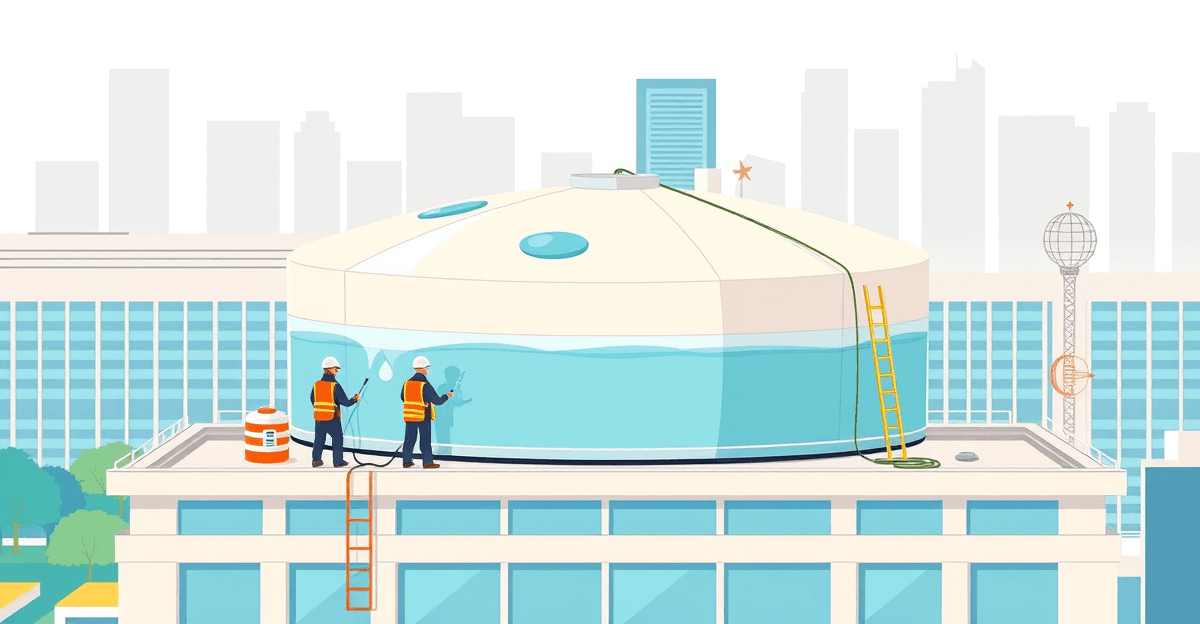
I'll be blunt — water tank cleaning is one of those tasks that building managers love to push to the bottom of the pile. It's out of sight, literally underground or up on the roof, and nobody thinks about it until something goes wrong. But after managing building maintenance across dozens of properties in Singapore, I can tell you that a dirty water tank is a ticking time bomb. PUB doesn't mess around with enforcement, and the health risks to residents are real.
Key Takeaway: PUB requires all water storage tanks in Singapore to be cleaned and disinfected every six months by a licensed water service plumber. Building owners and MCSTs bear legal responsibility for compliance. Proper documentation — including cleaning certificates and water quality test results — must be maintained and produced upon PUB's request.
What PUB Actually Requires (No Grey Area Here)
PUB mandates that every water storage tank in Singapore gets cleaned and disinfected at least once every six months. This isn't a guideline or a "nice to have" — it's enforced under the Public Utilities Act and the Public Utilities (Water Supply) Regulations.
I've seen building managers try to stretch this to eight or nine months. Don't. PUB inspectors show up unannounced, and the first thing they ask for is your cleaning certificate with dates.
The rule covers everything:
- •Roof-top gravity tanks — the ones you see on top of most older commercial and residential blocks
- •Ground-level storage tanks and basement cisterns
- •Booster pump tanks in high-rise developments
- •Fire reserve tanks that are part of the potable water system
Building owners, MCSTs, and managing agents are all on the hook for compliance. For strata-titled properties, the MCST holds primary responsibility under the Building Maintenance and Strata Management Act (BMSMA). I've sat through AGMs where council members were genuinely surprised to learn this was their problem, not the managing agent's alone.
Who Can Actually Clean Your Water Tank?
Only PUB-licensed water service plumbers (LWSP) can do this work. Full stop. I once had a building manager tell me their in-house technician had "cleaned" the tank to save money. That's a regulatory violation in itself, and the cleaning doesn't count.
When you're selecting a contractor, check these boxes:
- •A valid PUB plumber's licence (you can verify this on PUB's online directory — takes two minutes)
- •Experience with your building's tank type and capacity
- •Ability to provide cleaning certificates and post-cleaning water sampling reports
- •Adequate insurance coverage, including workmen's compensation as required by MOM
For contractors quoting these jobs, having a clear and professional pricing structure matters. Our guide on how to quote maintenance jobs in Singapore covers pricing strategies that apply to regulated services like tank cleaning.
How the Cleaning Actually Works (Step by Step)
Knowing the process helps you spot contractors who cut corners. I've seen my share of dodgy operators who skip steps and charge full price.
1. Pre-Cleaning Preparation
- •Notify building occupants at least 48 hours in advance. Residents get annoyed when their water cuts out without warning — trust me on this
- •Arrange temporary water supply or schedule during low-usage hours. Most residential buildings go for the 11 PM to 5 AM window
- •Shut off the incoming supply and drain the tank
2. Tank Inspection and Cleaning
- •Inspect the interior for structural damage — cracks, corrosion, peeling coatings, sediment buildup
- •Remove sludge, sediment, and debris from the tank floor. You'd be amazed what accumulates in six months. I've seen everything from dead geckos to construction debris
- •Scrub all internal surfaces using approved cleaning agents
- •Flush the tank thoroughly with clean water
3. Disinfection
- •Apply chlorine-based disinfectant at 50 mg/L (50 ppm) of free residual chlorine
- •Minimum contact time of 2 hours — some contractors maintain 4 hours for larger tanks, which I'd recommend
- •Drain the disinfectant completely
- •Refill and flush until residual chlorine drops to 0.2–0.5 mg/L, within PUB's acceptable range for drinking water
4. Post-Cleaning Water Sampling
- •Collect samples from the tank and at least two distribution points
- •Test for residual chlorine, coliform bacteria (including E. coli), turbidity, and pH
- •Results must meet Singapore's drinking water quality standards
- •Keep the results for at least two years. PUB can ask for them at any time
5. Documentation and Certification
- •The licensed plumber issues a cleaning certificate — date, tank details, plumber's licence number
- •Water quality test results get attached
- •These records must be available for PUB inspection whenever they ask. Keep digital copies. Paper degrades fast in our humidity
Still tracking water tank cleaning jobs in spreadsheets and WhatsApp?
Werkks schedules recurring maintenance, keeps photo records of every completed job, and shows live status across all your contractors and staff. Free for 14 days.
Common Issues Found During Tank Inspections
Singapore's tropical climate — constant humidity and temperatures between 25–35°C — does a number on water tanks. Here's what we keep finding across properties:
Sediment buildup is the most common issue. Standard cleaning handles it, but if it keeps coming back fast, you might have pipe corrosion upstream feeding particles into the tank.
Cracked or peeling internal coating is more serious. When the coating fails, exposed concrete or metal leaches contaminants directly into your water supply. That needs recoating — not just cleaning.
Corroded metal components — replace the fittings immediately. If it's a steel tank with extensive corrosion, get a full structural assessment done.
Insect or vermin ingress — this is a critical finding. We've opened tank lids to find cockroaches, lizards, and worse. Seal the entry points and replace damaged mesh screens on overflow pipes. This is non-negotiable.
Biofilm formation tells you the disinfection frequency or dosage isn't adequate. If you're seeing this at the six-month mark, consider increasing your cleaning frequency.
Float valve malfunction causes overflow or insufficient refilling. Simple fix — replace promptly.
Including water tank inspections in your preventive maintenance schedule is the best way to make sure nothing slips through the cracks.
What Does Water Tank Cleaning Cost?
Typical costs range from $300 to $1,500 per tank, depending on:
- •Tank capacity: Smaller tanks (under 5,000 litres) run $300–$500. Large commercial tanks (20,000+ litres) can exceed $1,000
- •Tank type and accessibility: Underground or confined-space tanks cost more because of MOM's Workplace Safety and Health (Confined Spaces) Regulations — the contractor needs additional safety equipment and trained personnel
- •Number of tanks: Most commercial buildings have multiple tanks (ground-level receiving tank plus roof-top gravity tanks). Package pricing is standard
- •Water quality testing: Basic chlorine and coliform testing is usually included. If you want comprehensive testing (heavy metals, Legionella), add $150–$400
For MCSTs managing annual budgets, water tank cleaning is one of those predictable, recurring costs that's easy to plan for. Tracking it through proper maintenance KPI tracking helps you ensure you're getting value from your service providers year over year.
Penalties — PUB Doesn't Give Warnings
Under the Public Utilities (Water Supply) Regulations:
- •First offence: Fine up to $5,000
- •Subsequent offences: Fine up to $10,000
- •Contamination incidents: If contaminated water causes illness, building owners face additional liability under common law and the Environmental Public Health Act
I've seen one case where a condo MCST in the east side got hit with a contamination incident. PUB came in, did their investigation, issued mandatory corrective works at the MCST's expense, and the reputational damage was severe — it was all over the condo's resident chat groups within hours. For premium developments, that kind of incident tanks confidence in the management.
Best Practices From the Field
Compliance is the bare minimum. Here's what I tell every building manager I work with:
Set up a proper cleaning calendar. If your building has dual tanks, alternate the cleaning so water supply is never fully interrupted. Schedule well in advance — good licensed plumbers get booked up, especially around the June and December cleaning cycles when everyone remembers at the same time. Werkks simplifies job scheduling and invoicing for Singapore facilities managers, making it straightforward to set recurring water tank cleaning appointments and track contractor compliance across multiple properties.
Keep everything digital. PUB can show up any time and ask for records. If your cleaning certificates are in a folder somewhere in the management office that got moved during the last renovation, you've got a problem. Digital copies, backed up, accessible immediately.
Inspect between cleanings. Walk up to the roof tank once a quarter — check the covers, overflow pipes, vent screens, and surrounding area. You'll catch problems early. This fits naturally into your mid-year building maintenance checklist.
Coordinate with other maintenance works. If you're doing pump servicing or pipe inspections the same week, bundle them with tank cleaning. Less disruption for residents, better use of the water shutdown window.
Verify credentials every single time. Licences expire. I've had contractors show up with an expired PUB licence because their renewal paperwork was stuck. Confirm it's current before every engagement, not just at the start of the term contract.
When Cleaning Isn't Enough — Tank Replacement
Older buildings sometimes have water tanks that are past the point of cleaning. Warning signs include:
- •Structural cracks compromising watertightness
- •Extensive internal corrosion on steel tanks
- •Non-compliant materials (tanks not meeting SS 636 or equivalent standards)
- •Capacity insufficient for current building occupancy
Tank replacement requires PUB approval and a licensed plumber. If your building is going through major refurbishment anyway, it's a good time to upgrade to modern GRP (Glass Reinforced Plastic) or stainless steel tanks. They resist Singapore's corrosive tropical conditions much better and need less maintenance over time. If your organisation needs custom digital systems to manage complex maintenance workflows across multiple sites, Adaptels builds tailored software solutions for Singapore SMEs in the facilities management space.
The Bottom Line
Water tank cleaning is non-negotiable. Clean every six months, use a licensed plumber, test the water, keep your records. The building managers who do this well are the ones who build it into their systems — recurring schedules, digital records, consistent contractor verification — rather than scrambling to remember when the last clean was done.
Your residents are drinking this water. Your tenants are bathing their kids in it. Get it right.
Sources
Frequently Asked Questions
How often must water tanks be cleaned in Singapore?
Under PUB regulations, all water storage tanks in Singapore must be cleaned and disinfected at least once every six months. This applies to all building types — residential, commercial, and industrial. Building owners or MCSTs that fail to comply may face fines under the Public Utilities Act.
Who is allowed to clean water tanks in Singapore?
Water tank cleaning must be carried out by PUB-licensed water service plumbers (Licensed Water Service Plumber or LWSP). Only contractors holding a valid PUB plumber's licence are authorised to perform tank cleaning, disinfection, and related maintenance. Building owners should verify the licence before engaging any contractor.
What happens if a building fails to clean its water tank on schedule?
Non-compliance with PUB's mandatory six-monthly cleaning schedule can result in enforcement action, including fines of up to $5,000 for a first offence under the Public Utilities (Water Supply) Regulations. Repeat offences may attract higher penalties. More critically, neglected tanks risk bacterial contamination including Legionella, posing serious health risks to occupants.
water tank cleaningPUB regulationsfacility management Singaporebuilding maintenancecomplianceMCST
Keep your maintenance records inspection-ready
Schedule recurring inspections, collect photo proof of completed work, and keep an audit trail of every job — free for 14 days. No credit card required.
Start Free TrialNo credit card14-day trialCancel anytime
Related Articles
compliance-regulations
Indoor Air Quality Standards: SS 554 Compliance
A practical guide to indoor air quality Singapore standards, including SS 554 compliance, IAQ testing, CO2 limits, and ACMV maintenance for facility managers.
compliance-regulationsNEA Noise Regulations Singapore: Limits & Hours
NEA caps construction noise at 75 dBA (7am–7pm) near homes, with stricter night limits. See the dBA limits by zone, permitted working hours, and how to handle complaints.
compliance-regulationsStrata Title Building Inspection Requirements: Statutory Compliance for MCSTs
A practical guide to building maintenance statutory compliance for strata title properties in Singapore — MCST obligations, BCA periodic structural and facade inspections, and compliance timelines.