property-management10Mervin Tan
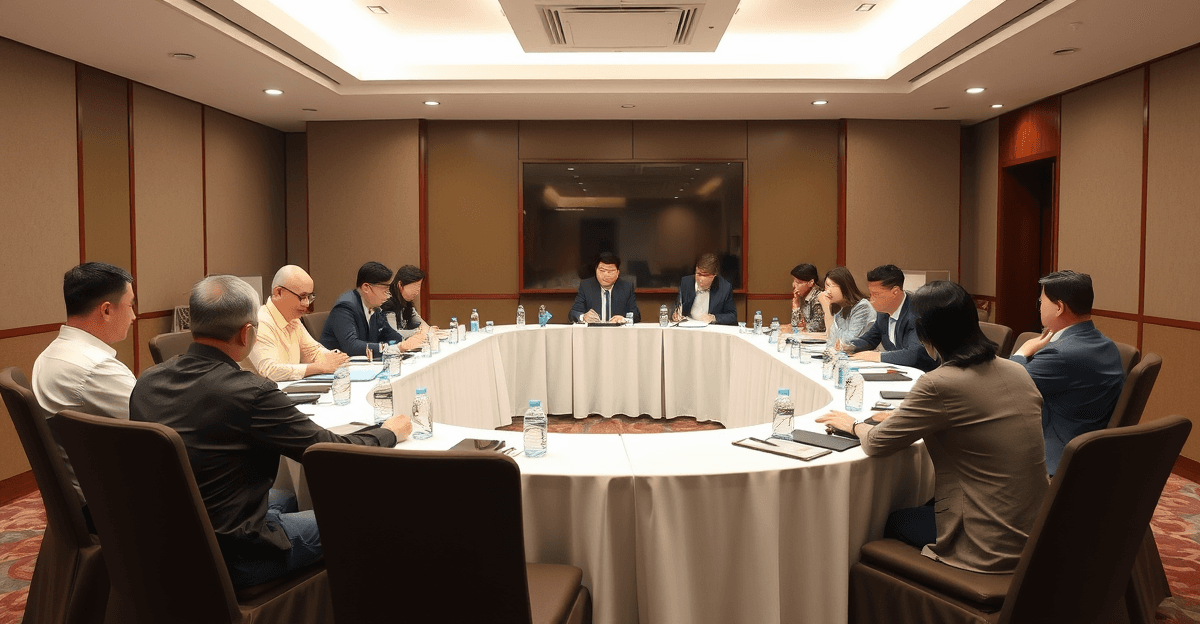
I've sat through MCST AGMs that lasted 45 minutes and ones that dragged past midnight with shouting matches over painting budgets. The difference between a smooth AGM and a disaster usually comes down to preparation — specifically, whether the management council did its homework. The MCST annual general meeting is the single most important governance event for any condo or strata-titled development in Singapore. It is the forum where subsidiary proprietors exercise their rights, approve budgets, elect council members, and hold the management corporation accountable. Whether you are a first-time council member or a seasoned facility manager, understanding how to properly convene, conduct, and follow up on AGM proceedings is essential for BMSMA compliance and effective estate management.
Key Takeaway: Every MCST in Singapore must hold an AGM at least once per calendar year with no more than 15 months between meetings. The meeting requires a quorum of 30% share value, follows a prescribed agenda under the BMSMA, and all resolutions must be properly recorded and filed. Getting AGM procedures right protects the management council from legal disputes and ensures transparent governance.
What Is an MCST Annual General Meeting and Why Does It Matter?
An MCST annual general meeting is a statutory meeting required under the Building Maintenance and Strata Management Act (BMSMA) for every management corporation in Singapore. It serves as the primary decision-making forum for subsidiary proprietors — the legal owners of strata-titled units.
The AGM is where budgets are approved, maintenance levies are set, audited accounts are presented, and the management council is elected. Unlike council meetings (which handle day-to-day governance), the AGM is the only meeting where all subsidiary proprietors can directly vote on matters affecting the estate. Skipping or mishandling an AGM can expose the management council to legal challenges and erode trust among residents.
For developments with hundreds of units, AGM preparation can take weeks of coordination — from issuing notices to compiling maintenance reports. This is where tools like Werkks simplify job scheduling and invoicing for Singapore facilities managers, making it easier to consolidate maintenance records and contractor reports ahead of the meeting.
MCST Annual General Meeting Requirements Under the BMSMA
The BMSMA sets out clear rules governing when and how an MCST annual general meeting must be held. Non-compliance can result in penalties or applications to the Strata Titles Boards (STB).
Timing and Frequency
- •The first AGM must be held within one month after the initial period expires (i.e., when the developer's control ends).
- •Subsequent AGMs must be held at least once per calendar year, with no more than 15 months between consecutive meetings.
- •If the management council fails to convene an AGM, any subsidiary proprietor may apply to the STB for an order to hold one.
Notice Requirements
The MCST must serve written notice of the AGM to every subsidiary proprietor at least 14 days before the meeting date. The notice must include:
- •Date, time, and venue of the meeting
- •The full agenda, including any motions to be tabled
- •Copies of the audited financial statements
- •Proxy forms
Notices should be sent by post to the last known address or, if the by-laws allow, by electronic means. Proper service of notice is critical — inadequate notice is one of the most common grounds for challenging AGM resolutions.
Still tracking mcst jobs in spreadsheets and WhatsApp?
Werkks schedules recurring maintenance, keeps photo records of every completed job, and shows live status across all your contractors and staff. Free for 14 days.
How to Prepare the MCST AGM Agenda
A well-structured agenda is the backbone of an effective MCST annual general meeting. The BMSMA prescribes certain mandatory items, but councils can add supplementary matters relevant to their estate.
Standard AGM Agenda Items
- 1.Confirmation of minutes from the previous AGM
- 2.Chairperson's report on the state of the estate
- 3.Presentation of audited accounts for the preceding financial year
- 4.Approval of the budget and determination of contributions (maintenance levies)
- 5.Election of council members (typically every 1–2 years)
- 6.Appointment of auditors for the coming year
- 7.Motions on notice — resolutions submitted by subsidiary proprietors (must be lodged with the secretary in advance)
- 8.Any other business (items raised from the floor, though no binding resolutions can be passed under AOB)
Preparing Supporting Documents
Council members and managing agents should compile the following ahead of the AGM:
- •Audited financial statements — including the management fund and sinking fund balances
- •Maintenance and repair reports — a summary of all major works completed, referencing your preventive maintenance schedule and any outstanding defects
- •Insurance policy summary — confirming adequate coverage for the common property
- •Contractor performance data — key maintenance KPIs such as response times, completion rates, and cost variances
- •Fire safety compliance status — confirmation that the estate meets SCDF fire safety requirements
Quorum, Voting, and Proxy Rules for MCST AGMs
Understanding quorum and voting rules prevents procedural errors that could invalidate resolutions passed at the meeting.
Quorum Requirements
The quorum for an MCST annual general meeting is subsidiary proprietors representing at least 30% of the total share value of the development. Share values are assigned to each lot based on its strata area and are recorded in the strata title plan.
If a quorum is not achieved within 30 minutes, the meeting is adjourned by one week. At the adjourned meeting, those present form the quorum regardless of share value — which means important decisions could be made by a small group of owners.
Types of Resolutions
| Resolution Type | Requirement | Common Use |
|---|---|---|
| Ordinary resolution | Simple majority (>50%) of votes cast | Budget approval, council elections |
| Special resolution | At least 75% of votes cast | Changes to by-laws |
| 90% resolution | 90% of share value | Significant alterations to common property |
| Unanimous resolution | 100% of share value | Sale of common property (en bloc) |
Proxy Voting
Subsidiary proprietors who cannot attend may appoint a proxy. Proxy forms must be deposited with the MCST secretary at least 48 hours before the meeting. Each proxy holder can represent a limited number of lots to prevent undue concentration of voting power. The BMSMA also permits show-of-hands voting for ordinary resolutions, though any subsidiary proprietor can demand a poll.
Common Challenges at MCST Annual General Meetings
Even experienced management councils encounter difficulties at AGMs. Here are the most frequent issues and how to handle them.
Low Attendance and Quorum Failures
Many Singapore condominiums struggle to achieve quorum, particularly developments with a high proportion of investor-owned or tenanted units. Strategies to improve attendance include:
- •Scheduling AGMs on weekend mornings or early evenings
- •Allowing proxy voting and making proxy forms easily accessible
- •Sending reminders via multiple channels (post, email, estate notice boards)
- •Clearly communicating high-impact agenda items (e.g., levy increases, major repair works)
Disputes Over Maintenance Spending
Budget debates are often the most contentious part of the AGM. Subsidiary proprietors may question why levies are rising or challenge specific expenditure items. Councils should prepare detailed breakdowns of maintenance spending, benchmark against comparable developments, and present contractor quotations for major works. Having a structured approach to quoting maintenance jobs and pricing contracts strengthens the council's position.
Contested Elections
Council elections can become adversarial, especially in larger developments. Under the BMSMA, a management council consists of 3 to 14 members. Candidates must be subsidiary proprietors (or company nominees if the lot is owned by a company). Ensure the election process follows prescribed procedures — nominations, seconding, and voting by poll if demanded.
After the AGM: Follow-Up Obligations
The work does not end when the meeting adjourns. The MCST has several post-AGM obligations.
- •Minutes must be prepared and made available to all subsidiary proprietors within 28 days.
- •Resolutions must be implemented — particularly budget approvals, levy adjustments, and approved works.
- •Council roles must be assigned — the newly elected council must appoint a chairperson, secretary, and treasurer at its first council meeting.
- •Statutory filings — notify the Commissioner of Buildings (under BCA) of any changes to the management council composition.
- •Contractor and vendor coordination — if the AGM approved major repair or upgrading works, engage contractors promptly. Having an organised system for scheduling and tracking jobs — especially across multiple estates — prevents delays and keeps projects on budget. Werkks helps facilities management companies coordinate job assignments, contractor schedules, and invoicing across their portfolio, so AGM-approved works move from resolution to completion efficiently.
For developments planning significant maintenance works, a mid-year building maintenance checklist can help councils track progress against AGM resolutions.
Digital Tools for MCST Meeting Management
Modern estate management increasingly relies on digital solutions to streamline AGM preparation and follow-through. From compiling maintenance records to tracking resolution implementation, purpose-built platforms reduce the administrative burden on managing agents and council volunteers.
If your management corporation or facilities management company needs custom digital tools tailored to Singapore's strata management requirements — such as automated levy calculations, online proxy submission, or real-time maintenance dashboards — working with a local software partner familiar with BMSMA workflows can be a worthwhile investment.
Conclusion
The MCST annual general meeting is more than a regulatory formality — it is the cornerstone of transparent, accountable estate governance in Singapore. Proper preparation, strict adherence to BMSMA procedures, and timely follow-up on resolutions protect both the management council and subsidiary proprietors. By understanding quorum rules, structuring the agenda correctly, and maintaining comprehensive maintenance records throughout the year, councils can run AGMs that are productive, compliant, and free of disputes.
Sources
- 1.Building Maintenance and Strata Management Act (BMSMA) — Singapore Statutes Online, full text of the Act governing MCSTs and strata-titled properties
- 2.Building and Construction Authority (BCA) — official regulatory body overseeing building maintenance and management in Singapore
- 3.Strata Titles Boards — Ministry of National Development, for dispute resolution related to strata-titled properties
- 4.Singapore Civil Defence Force (SCDF) — Fire Safety — fire safety requirements applicable to common property in strata developments
- 5.Commissioner of Buildings — BCA — information on statutory obligations for management corporations in Singapore
Frequently Asked Questions
How often must an MCST hold an annual general meeting in Singapore?
Under the Building Maintenance and Strata Management Act (BMSMA), every MCST must hold an annual general meeting once per calendar year, with no more than 15 months between consecutive AGMs. The first AGM must be held within one month after the expiry of the initial period. Failure to convene an AGM within the prescribed timeline can result in penalties under the Act.
What is the quorum required for an MCST annual general meeting?
The quorum for an MCST AGM is subsidiary proprietors representing at least 30% of the total share value. If a quorum is not present within 30 minutes of the scheduled start time, the meeting is adjourned to the same day, time, and place the following week. At the adjourned meeting, those present will constitute the quorum regardless of their share value.
Can subsidiary proprietors vote by proxy at an MCST AGM?
Yes, subsidiary proprietors can appoint a proxy to attend and vote on their behalf at an MCST annual general meeting. The proxy form must be deposited with the MCST secretary at least 48 hours before the meeting. A proxy does not need to be a subsidiary proprietor. Each proxy can represent a limited number of lots as prescribed under the BMSMA.
Core compliance reading: What Is the BMSMA? MCST Rules, Duties and Penalties — the Building Maintenance and Strata Management Act guide every Singapore building manager should know.
About the author
Mervin Tan
Founder, Werkks
Mervin Tan is the founder of Werkks and a software engineer based in Singapore. He builds maintenance management software used by Singapore facility teams, and writes practical guides on BCA, SCDF, PUB and BMSMA compliance for building managers and MCST councils. Werkks is built by Adaptels Pte. Ltd., Singapore.
MCSTannual general meetingcondo managementBMSMAstrata managementSingapore property management
Keep your maintenance records inspection-ready
Schedule recurring inspections, collect photo proof of completed work, and keep an audit trail of every job — free for 14 days. No credit card required.
Start Free TrialNo credit card14-day trialCancel anytime
Related Articles
property-management
Outsourcing vs In-House Maintenance: Cost Comparison
Outsourcing vs in-house maintenance cost comparison for Singapore facilities managers. Compare manpower, compliance, and overhead costs with real 2026 benchmarks.
property-managementManaging Multiple Properties in Singapore
A practical guide to managing multiple properties in Singapore: scheduling, compliance with BCA/SCDF rules, MCST obligations, and tools facility managers rely on.
property-managementPreparing Condo for En Bloc Sale: Maintenance Guide
A practical maintenance guide to preparing your condo for en bloc sale in Singapore — covering MCST obligations, BCA/SCDF compliance, and record-keeping for facility managers.