compliance-regulations8Mervin Tan
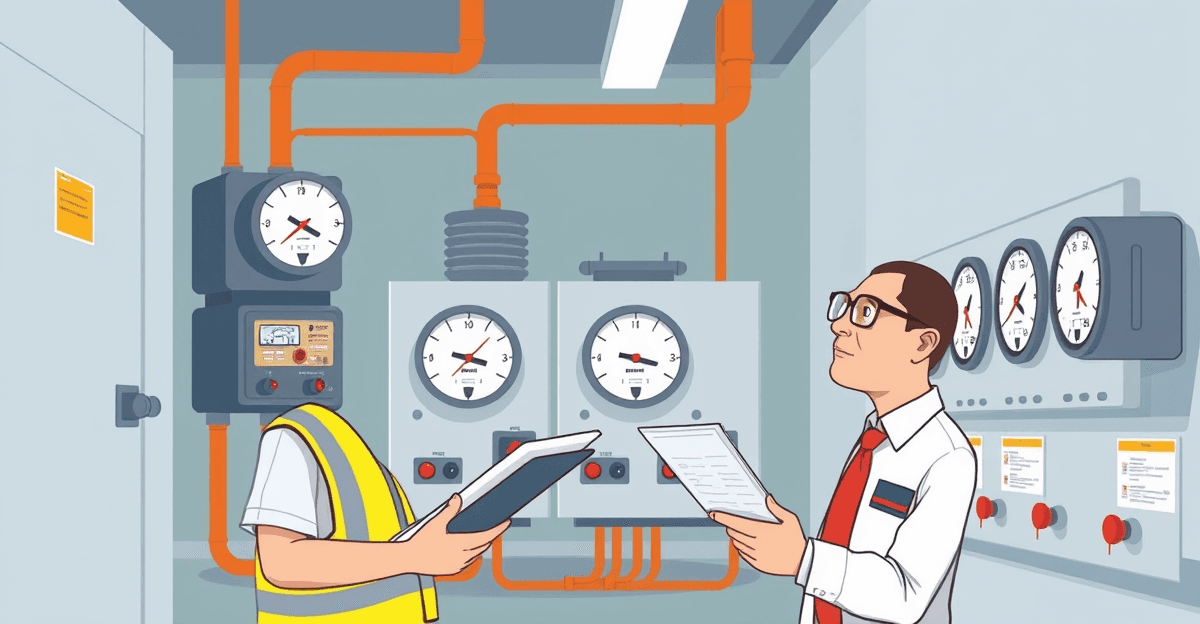
I did a walkthrough of a 15-year-old office building in Chai Chee last year where the chiller plant was running at barely 60% efficiency. The facility manager knew the energy bills were high — nearly $18,000 a month for a mid-size building — but had no data on where the waste was actually happening. A proper energy audit found that replacing two chillers and rebalancing the AHU system would save $4,800 a month. The payback period was under three years.
TL;DR — Key Takeaways for Facility Managers
- •Energy audits are essential for BCA Green Mark certification and increasingly mandatory for large commercial buildings in Singapore.
- •A comprehensive audit typically costs SGD 5,000–15,000 for medium buildings and takes 4–6 weeks to complete.
- •Audits must be conducted by BCA-accredited professionals and should identify 20–30% energy savings opportunities in most Singapore buildings.
- •Facility managers must track audit findings and implement recommendations to maintain compliance and reduce operating costs.
What Is an Energy Audit and Why Does It Matter for Singapore Buildings?
An energy audit is a systematic assessment of a building's energy consumption patterns, equipment efficiency, and operational practices. It identifies how much energy a building uses, where that energy is wasted, and what cost-effective measures can reduce consumption.
For Singapore commercial buildings, energy audits are critical because they directly support BCA Green Mark certification, reduce operating costs, and demonstrate environmental responsibility to tenants and investors. A typical energy audit can reveal 15–30% energy savings opportunities in existing buildings—translating to hundreds of thousands of dollars in annual utility cost reductions for large properties.
In Singapore's tropical climate, where air conditioning accounts for 40–50% of building energy use, energy audits are particularly valuable. They help facility managers optimize chiller performance, improve insulation, upgrade lighting systems, and implement demand-controlled ventilation—all essential in Singapore's heat and humidity.
Still tracking energy-audit jobs in spreadsheets and WhatsApp?
Werkks schedules recurring maintenance, keeps photo records of every completed job, and shows live status across all your contractors and staff. Free for 14 days.
BCA Green Mark Requirements: Where Energy Audits Fit
The Building and Construction Authority (BCA) Green Mark scheme is Singapore's leading green building rating system. It assesses buildings across five criteria: energy efficiency, water efficiency, indoor environmental quality, sustainable materials, and innovations.
Energy efficiency is the most heavily weighted category in BCA Green Mark, accounting for up to 30 points of the total 100-point assessment. To achieve Platinum, Gold, or Silver ratings, buildings must demonstrate measurable energy performance through:
- 1.Baseline Energy Consumption Data — Buildings must establish a reference point using ISO 50001 energy management standards or BCA's own benchmarking framework.
- 2.Commissioning Reports — HVAC, lighting, and electrical systems must be commissioned and re-commissioned to ensure optimal performance.
- 3.Energy Audit Documentation — BCA-accredited auditors must conduct formal audits and certify energy consumption figures.
- 4.Operational Monitoring — Buildings must track energy use via Building Management Systems (BMS) or manual readings.
For buildings seeking Green Mark certification or renewal, an energy audit is not optional—it is a mandatory compliance requirement. The BCA requires that audits be conducted by accredited professionals listed on the BCA Green Mark Auditor Register.
Understanding Singapore's Energy Audit Standards
Singapore adopts ISO 50001 (Energy Management Systems) and ISO 50002 (Energy Audits) as the technical framework for energy assessments. These international standards ensure consistency, transparency, and credibility across all audits.
An ISO 50002-compliant energy audit must include a detailed analysis of energy use, identification of energy-saving opportunities (ESOs), and quantified recommendations with projected payback periods. In practice, this means:
- •Baseline establishment — Measuring current energy consumption across all systems (HVAC, lighting, water heating, refrigeration, etc.)
- •System analysis — Testing chiller efficiency, boiler performance, pump operation, and lighting power density
- •Data review — Examining 12–36 months of utility bills to identify seasonal trends and anomalies
- •Recommendations — Proposing 15–40 specific energy-saving measures, each with estimated annual savings and implementation costs
Facility managers should expect auditors to examine equipment schedules, operational logs, building occupancy patterns, and maintenance records. This is why maintaining accurate preventive maintenance records significantly streamlines the audit process.
Step-by-Step: How to Prepare Your Building for an Energy Audit
1. Engage a BCA-Accredited Energy Auditor
The first step is to identify and hire a qualified auditor. The BCA maintains a list of accredited energy auditors on its official website. When selecting an auditor, confirm:
- •BCA accreditation status and audit certifications
- •Experience with your building type and size
- •References from similar Singapore properties
- •Clear scope of work and timeline
2. Gather Building Documentation
Auditors will require:
- •Building plans and mechanical drawings (layout, HVAC schematics, electrical distribution)
- •Equipment specifications (chiller capacity, boiler efficiency ratings, lighting fixture data)
- •Utility bills (electricity, gas, and water for 24–36 months)
- •Maintenance records (service logs, equipment age, previous upgrades)
- •Occupancy data (floor usage schedules, tenant mix, operating hours)
- •BMS data (if available; real-time energy monitoring records)
3. Schedule the Audit During Normal Operations
Audits typically take 2–5 days on-site, depending on building size and system complexity. Schedule during normal operating hours so the auditor can assess actual energy use. Avoid major maintenance shutdowns or occupancy changes that might skew results.
4. Designate a Facilities Contact
Assign a single point of contact from your facilities team to accompany the auditor, provide access to equipment rooms and electrical panels, and answer operational questions. This speeds up the audit and ensures all systems are properly assessed.
What Energy Auditors Look For: Key Assessment Areas
HVAC Systems (40–50% of Building Energy)
HVAC systems consume the most energy in Singapore commercial buildings due to continuous cooling demand. Auditors assess:
- •Chiller efficiency — Testing refrigerant charge, compressor performance, and condenser fouling
- •Air handling unit (AHU) operation — Checking damper control, filter cleanliness, and airflow balance
- •Ductwork condition — Identifying leaks, inadequate insulation, or poor distribution
- •Thermostat and controls — Verifying setpoint optimization and occupancy-based scheduling
A typical finding: Many Singapore buildings operate chillers at excessive cooling capacity or fail to adjust setpoints seasonally. Proper tuning alone can save 10–15% of HVAC energy.
Lighting Systems (15–25% of Building Energy)
Outdated lighting and poor controls drive unnecessary electricity consumption. Auditors examine:
- •Fixture age and type — Assessing LED conversion opportunities
- •Power density — Measuring watts per square meter against BCA benchmarks
- •Controls and daylight harvesting — Checking for occupancy sensors and daylighting systems
- •Maintenance practices — Identifying lumen depreciation from dirty fixtures
LED conversion typically reduces lighting energy by 50–70% and qualifies for immediate BCA Green Mark points.
Building Envelope and Insulation
In Singapore's hot, humid climate, maintaining the building envelope reduces cooling load. Auditors inspect:
- •Window performance — Solar heat gain through glazing, window seal integrity
- •Wall and roof insulation — Heat transfer through exterior surfaces
- •Air leakage — Cracks, gaps, or poor weatherstripping
- •Shading features — External louvers, internal blinds, and their operational status
Building envelope upgrades are expensive but can deliver 5–10% energy savings over 10+ years.
Water Heating and Hot Water Distribution
In hotels, hospitals, and food facilities, hot water systems consume significant energy. Auditors check:
- •Water heater efficiency and age
- •Pipe insulation and heat loss
- •Flow rates and demand patterns
- •Opportunity for solar thermal or heat recovery systems
Interpreting Audit Findings: Understanding Energy-Saving Opportunities (ESOs)
A comprehensive audit report will list 15–40 energy-saving opportunities (ESOs), each with:
- 1.Current energy use (kWh/year or MWh/year)
- 2.Annual cost (SGD)
- 3.Recommended action (equipment upgrade, operational change, commissioning)
- 4.Estimated annual savings (SGD and %)
- 5.Capital cost (SGD)
- 6.Simple payback period (years)
- 7.Implementation timeline
Facility managers should prioritize ESOs with payback periods under 3 years, as these deliver rapid cost recovery and typically qualify for BCA incentives.
Common high-impact ESOs in Singapore buildings:
| ESO | Typical Saving | Payback Period |
|---|---|---|
| Chiller optimization & cleaning | 8–12% HVAC energy | 0.5–1.5 years |
| LED lighting retrofit | 50–70% lighting energy | 2–4 years |
| VFD installation on AHU fans | 20–30% fan energy | 3–5 years |
| Boiler water treatment & optimization | 5–10% heating energy | 1–2 years |
| Building automation system (BAS) upgrade | 10–15% overall | 4–7 years |
| Chiller replacement (modern unit) | 25–35% cooling energy | 5–8 years |
Legal and Compliance Obligations
BCA Green Mark and Certification Requirements
For buildings seeking BCA Green Mark certification, the audit report is a non-negotiable compliance document. BCA requires:
- •Audits conducted by accredited professionals
- •Baseline energy consumption measured and certified
- •Recommendations documented with estimated savings
- •Monitoring plan established for post-implementation verification
Buildings that fail to provide audit documentation cannot be certified, which impacts property value, tenant appeal, and refinancing terms.
MCST Buildings and Strata Management Obligations
For MCST (Management Corporation Strata Title) buildings, facility managers should note that under the Building Maintenance and Strata Management Act (BMSMA), the management corporation has a duty to maintain the building in good repair. This includes building systems and energy efficiency.
Conducting regular energy audits demonstrates due diligence and protects the MCST against claims of negligence. Many MCST by-laws now require annual energy reviews as part of preventive maintenance obligations. For more on MCST compliance, see Singapore Building Maintenance and Strata Management Act: What Building Managers Need to Know.
Environmental and Sustainability Reporting
Singapore's commitment to sustainability is reflected in the Green Building Masterplan and the Carbon Pricing Act. Large commercial building owners may face increasing pressure (or regulation) to report energy consumption and carbon footprint. Energy audit data forms the baseline for these disclosures and demonstrates environmental leadership to tenants and stakeholders.
Scheduling and Tracking: Integrating Energy Audits Into Your Maintenance Plan
Energy audits should be treated as a core maintenance activity, not a one-off event. Facility managers must:
- 1.Schedule audits every 3 years at minimum (or per BCA Green Mark renewal cycles)
- 2.Track ESO implementation — Document which recommendations have been completed and their actual energy savings
- 3.Monitor energy consumption — Use BMS data or utility bill analysis to verify improvements
- 4.Update baseline metrics — Recalibrate energy benchmarks after major retrofits or system changes
Werkks simplifies job scheduling and invoicing for Singapore facilities managers, making it easy to schedule recurring audits, track contractor work, and document compliance activities. By integrating energy audits into your maintenance workflow, you ensure nothing is missed and all regulatory obligations are met.
For a comprehensive approach, combine energy audits with maintenance KPI tracking to measure energy savings against operational performance targets.
Cost-Benefit Analysis: Why the Investment in Energy Audits Pays Off
While a comprehensive energy audit costs SGD 5,000–15,000, the return on investment is typically strong:
A 15,000 sqm office building spending SGD 1.5 million annually on utilities might identify SGD 225,000–300,000 in annual savings through a SGD 10,000 audit. This represents a simple payback of 1.2–1.5 months.
Beyond direct cost savings, energy audits deliver:
- •BCA Green Mark certification — Higher property valuations, premium rents, and competitive advantage
- •Tenant retention — Modern, efficient buildings attract and retain quality tenants
- •Reduced operational risk — Identifying equipment nearing failure (e.g., aging chillers) prevents costly emergency repairs
- •Regulatory compliance — Demonstrating adherence to BCA and environmental standards
- •Carbon reduction — Supporting Singapore's Net Zero by 2050 commitment and ESG goals
Next Steps: Implementing Audit Recommendations
Once the audit is complete, facility managers should:
- 1.Prioritize ESOs by payback period and impact — Fast-payback items (< 3 years) should be budgeted immediately
- 2.Obtain quotes from contractors — Get competing bids for major upgrades; see How to Quote Maintenance Jobs in Singapore for guidance on evaluating proposals
- 3.Track implementation progress — Document completed work and verify claimed energy savings
- 4.Re-measure energy consumption — Conduct a follow-up audit 6–12 months after major retrofits to confirm savings
- 5.Update your BMS and monitoring systems — Ensure real-time tracking of energy use so facility staff can identify anomalies early
Sources & References
- 1.BCA Green Mark Scheme - Official Criteria and Auditor Register
- 2.Building and Construction Authority - Energy Efficiency in Buildings
- 3.ISO 50002:2014 - Energy Audits (International Standard)
- 4.Energy Market Authority (EMA) - Energy Efficiency Guidelines for Buildings
- 5.Singapore Building Maintenance and Strata Management Act (BMSMA) - Ministry of Law
This article is intended for facility managers, building owners, and MCST administrators in Singapore. For specific compliance guidance or audit scheduling, consult a BCA-accredited energy auditor or your building's professional manager.
Frequently Asked Questions
Is an energy audit mandatory for all Singapore commercial buildings?
Energy audits are not universally mandatory, but they are required to obtain or maintain BCA Green Mark certification, which is increasingly expected by tenants and investors. Buildings over 2,000 sqm that consume more than 54 MWh annually may fall under the Building Energy Code requirements. MCST buildings and commercial properties seeking premium ratings or refinancing should conduct audits every 3–5 years. Building owners should check with BCA and their property advisor to determine their specific obligations.
How much does an energy audit cost in Singapore?
A comprehensive energy audit for a medium-sized commercial building (5,000–10,000 sqm) typically costs SGD 5,000–15,000, depending on building complexity and audit scope. Larger buildings or those requiring detailed system analysis may cost SGD 15,000–40,000+. Many BCA-accredited auditors offer tiered packages: Level 1 (preliminary, SGD 2,000–5,000), Level 2 (detailed, SGD 8,000–20,000), and Level 3 (investment-grade, SGD 20,000+). Building owners can check the BCA website for accredited energy auditors and request quotes tailored to their property.
How often do Singapore commercial buildings need energy audits?
BCA Green Mark renewal audits are typically required every 3 years for certified buildings. For non-certified buildings, a baseline audit every 3–5 years is industry best practice to track energy performance and identify cost-saving opportunities. Buildings undergoing major retrofits or system replacements should conduct audits immediately before and after work. The frequency may increase if buildings fail to meet energy consumption targets or if regulations change. Facility managers should schedule audits during low-occupancy periods to minimize operational disruption.
Core compliance reading: What Is the BMSMA? MCST Rules, Duties and Penalties — the Building Maintenance and Strata Management Act guide every Singapore building manager should know.
About the author
Mervin Tan
Founder, Werkks
Mervin Tan is the founder of Werkks and a software engineer based in Singapore. He builds maintenance management software used by Singapore facility teams, and writes practical guides on BCA, SCDF, PUB and BMSMA compliance for building managers and MCST councils. Werkks is built by Adaptels Pte. Ltd., Singapore.
energy-auditBCA-Green-Markcompliancefacilities-managementSingapore-buildingssustainability
Keep your maintenance records inspection-ready
Schedule recurring inspections, collect photo proof of completed work, and keep an audit trail of every job — free for 14 days. No credit card required.
Start Free TrialNo credit card14-day trialCancel anytime
Related Articles
compliance-regulations
Condo By-Laws Enforcement: MCST Legal Powers
A practical guide to condo by-laws enforcement in Singapore — how MCSTs use BMSMA legal powers to manage breaches, fines, and resident compliance effectively.
compliance-regulationsGas Pipe Inspection for Singapore Commercial Buildings
A practical guide to gas pipe inspection for Singapore commercial buildings, covering EMA licensing, SCDF rules, inspection frequency, costs, and MCST compliance duties.
compliance-regulationsRooftop Safety Railing Requirements: WSH Standards
Rooftop safety railing requirements for Singapore buildings under WSH, BCA & MOM standards. A practical compliance guide for facility managers and MCSTs.