compliance-regulations8Mervin Tan
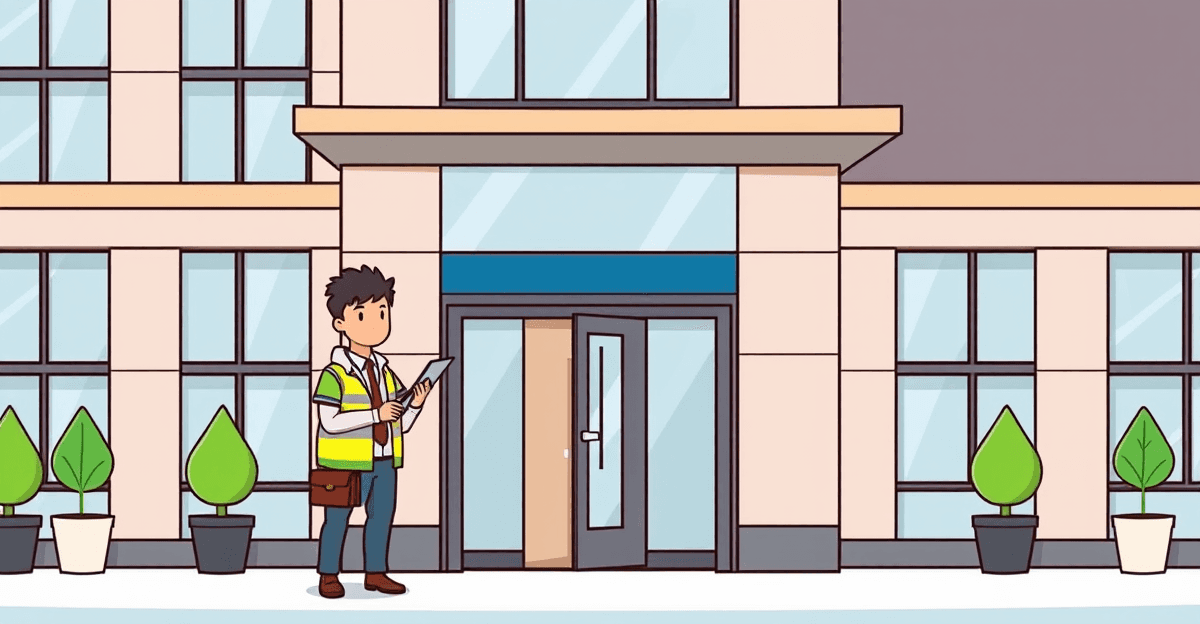
The BCA accessibility code — formally the Code on Accessibility in the Built Environment, published by Singapore's Building and Construction Authority (BCA) — is the legal standard that governs barrier-free design across public and commercial buildings. For building owners, facility managers, and MCST councils, it is not just a design document handed over at Temporary Occupation Permit (TOP); it is an ongoing maintenance obligation that shapes how ramps, lifts, toilets, and circulation routes must be kept usable for people of all abilities. This guide explains what the code requires, who is accountable, and how to keep your building compliant year after year.
Key points
- The BCA Code on Accessibility applies to all new buildings and to major additions and alterations (A&A) at the point of plan approval.
- Under the BMSMA, MCSTs bear ongoing maintenance responsibility for accessibility features in common areas — ramps, lifts, accessible toilets, and tactile systems must be kept functional and unobstructed.
- Common failures are maintenance-driven: ramps over 1:12 gradient, blocked accessible toilets, damaged tactile strips, and faulty lifts.
- Accessibility is a continuous obligation. A documented preventive maintenance schedule is your strongest evidence of compliance.
- Singapore is moving beyond minimum "barrier-free" standards toward Universal Design (UD), which BCA actively recognises through its UD Mark scheme.
What is the BCA accessibility code and who does it apply to?
The BCA accessibility code sets the minimum technical requirements for barrier-free design in Singapore's built environment — covering approach routes, entrances, internal circulation, toilets, lifts, signage, and more. It applies to virtually all non-landed developments: commercial buildings, industrial premises, condominiums, and public facilities. Compliance is checked at the plan-approval stage and enforced under the Building Control Act.
The current framework traces back to the first Code on Barrier-Free Accessibility in 1990 and has been progressively strengthened, with major revisions expanding scope to residential common areas and, more recently, embedding Universal Design principles. The definitive point for facility managers to understand: any new building, change of use, or major A&A works must meet the prevailing edition of the code — you cannot rely on the standard that applied when the building was first built.
Approximately 1 in 6 Singaporeans will be aged 65 or older by the late 2020s, and with the population ageing rapidly, accessibility has shifted from a niche requirement to a mainstream operational concern. This demographic reality is precisely why BCA continues to tighten standards and why enforcement expectations are rising.
What does barrier-free design actually require?
Barrier-free design means the building can be approached, entered, and used independently by everyone — including wheelchair users, people with visual or hearing impairments, the elderly, and parents with prams. The BCA code translates this principle into specific, measurable requirements. Getting the numbers right is what separates a compliant building from an enforcement notice.
Key technical benchmarks that facility managers should know:
- •Ramps: Maximum gradient of 1:12 for accessible ramps, with level landings at intervals and appropriate handrails on both sides. Steeper gradients are one of the most cited non-compliances.
- •Doorways and corridors: Accessible doorways generally require a minimum clear width of 850mm, with circulation routes wide enough for wheelchair passing.
- •Accessible toilets: Must provide adequate turning space (a clear circle of around 1500mm diameter), grab bars, and an emergency call system — and must never be repurposed as storage.
- •Lifts: Accessible lifts require minimum internal dimensions, tactile and braille buttons, audible floor announcements, and door widths that accommodate wheelchairs.
- •Tactile guidance systems: Continuous tactile ground surface indicators guide visually impaired users from the boundary to key facilities; broken or painted-over strips are a frequent failure.
- •Signage: Directional and identification signage must meet contrast, height, and (where required) braille and tactile standards.
These are not aspirational targets — they are the baseline. The barrier-free design standard is only met when every element in the accessible route works together as an unbroken chain. A perfect ramp is useless if the accessible toilet at the end of it is locked and full of cleaning supplies.
From barrier-free to Universal Design
BCA has increasingly promoted Universal Design (UD) — a broader philosophy that designs for the full spectrum of users from the outset, rather than adding accessibility features as an afterthought. BCA's Universal Design Mark and the associated UD Guides reward buildings that go beyond the minimum code, addressing family-friendliness, wayfinding, and inclusive amenities. Aiming for UD standards is increasingly a competitive advantage for commercial landlords chasing quality tenants.
Still tracking bca accessibility code jobs in spreadsheets and WhatsApp?
Werkks schedules recurring maintenance, keeps photo records of every completed job, and shows live status across all your contractors and staff. Free for 14 days.
Who is responsible for maintaining accessibility features?
Under the Building Maintenance and Strata Management Act (BMSMA), accessibility features that sit on common property — ramps, lifts, accessible toilets, handrails, tactile strips — are the maintenance responsibility of the MCST or the building owner. This is a statutory duty, not a discretionary service, and it means these features must be kept functional, unobstructed, and safe at all times.
In practice, responsibility is often shared across parties: the MCST maintains common areas, individual tenants must not obstruct or alter accessible routes, and appointed maintenance contractors carry out inspections and repairs. The clearest way to demonstrate that you are meeting this obligation is a documented, recurring inspection and maintenance regime. If BCA or a resident raises a complaint, your maintenance records are your first line of defence. For strata developments, accessibility maintenance should be a standing item — see our guide to the MCST annual general meeting for how to get maintenance obligations onto the council agenda and budget.
This is where operational discipline matters. Werkks simplifies job scheduling and invoicing for Singapore facilities managers, making it straightforward to assign recurring accessibility inspections, log completed work with photos, and keep an audit trail that stands up to regulatory scrutiny. Building accessibility checks into a structured preventive maintenance schedule turns a legal risk into a routine, trackable task.
How do you keep a building compliant with the BCA accessibility code?
Staying compliant with the BCA accessibility code is fundamentally a maintenance problem, not a design one — most non-compliances in existing buildings arise from wear, obstruction, or unauthorised modification rather than original defects. The solution is a regular inspection cycle that treats accessibility features with the same rigour as fire safety systems. A quarterly walkthrough of every accessible route catches the vast majority of issues before they escalate.
A practical accessibility maintenance checklist should cover:
- 1.Ramps and approach routes — check gradients haven't been altered, surfaces are non-slip (critical in Singapore's tropical climate where rain and algae growth create slip hazards), and handrails are secure.
- 2.Accessible toilets — confirm they are unlocked, unobstructed, and that grab bars, call bells, and fixtures are functional.
- 3.Lifts — verify tactile buttons, audible announcements, door timing, and emergency communications. Coordinate this with your statutory lift maintenance regime.
- 4.Tactile guidance and signage — inspect for damage, fading, obstruction, and continuity from boundary to destination.
- 5.Doorways and thresholds — ensure clear widths are maintained and no furniture, planters, or deliveries block them.
Because so much accessibility infrastructure overlaps with life-safety systems, it pays to align these checks with your broader compliance calendar — including your fire safety inspection requirements and your mid-year building maintenance checklist. Tracking completion rates and recurring problem areas as part of your maintenance KPIs helps building owners spot patterns — for example, a particular tenant who repeatedly obstructs an accessible route.
Some forward-looking managers are also deploying IoT sensors to monitor lift performance and high-traffic accessible facilities in real time, reducing the window between a fault developing and it being fixed. For buildings pursuing bespoke compliance-tracking tools or integrations, custom software specialists like Adaptels can build solutions tailored to a specific portfolio's needs.
What happens if you don't comply?
Non-compliance with accessibility requirements can result in BCA enforcement action under the Building Control Act, including rectification orders and other regulatory consequences. Beyond regulatory penalties, poorly maintained accessibility features expose building owners to reputational damage and potential liability if a person is injured. The reputational and financial cost of a preventable accessibility failure almost always exceeds the cost of routine maintenance.
For a building undergoing A&A works, the trigger is especially important to understand: once you carry out major alterations, the entire relevant portion of the building must be brought up to the current code, not the version that applied when it was first built. This can significantly affect renovation budgets, and factoring it in early is essential when you quote maintenance and upgrading jobs or price larger maintenance contracts.
Key takeaways for building owners and facility managers
The BCA accessibility code is best understood as a continuous operational commitment rather than a one-time hurdle. New builds and major alterations must meet the prevailing code, MCSTs carry a statutory duty to maintain barrier-free common property under the BMSMA, and the most common failures are maintenance-driven and entirely preventable. Build accessibility inspections into a documented, recurring schedule, keep photographic records, and treat these features with the same seriousness as fire and life-safety systems. Do that consistently, and compliance becomes a byproduct of good facilities management rather than a source of anxiety.
Sources & References
- 1.BCA — Code on Accessibility in the Built Environment — official BCA guidance on accessibility and Universal Design standards.
- 2.BCA Universal Design Mark Scheme — recognition programme for buildings exceeding minimum accessibility standards.
- 3.Building Maintenance and Strata Management Act (BMSMA) — Singapore Statutes Online — statutory basis for MCST common property maintenance duties.
- 4.Building Control Act — Singapore Statutes Online — the legislation under which accessibility requirements are enforced.
- 5.Ministry of National Development — Built Environment Policy — context on Singapore's demographic shift and inclusive built environment policy.
Frequently Asked Questions
Is the BCA accessibility code mandatory for existing buildings in Singapore?
New buildings and major additions or alterations must comply with the prevailing BCA Code on Accessibility in the Built Environment at the point of plan approval. Existing buildings are not automatically forced to retrofit overnight, but any significant upgrade, change of use, or A&A works triggers compliance with the current code. Many older buildings have also been upgraded through BCA's Accessibility Fund initiatives. Building owners should treat accessibility as a live obligation, not a one-time approval.
Who is responsible for maintaining barrier-free features in a strata-titled building?
Under the Building Maintenance and Strata Management Act (BMSMA), the MCST is responsible for maintaining common property, which includes ramps, lifts, accessible toilets, handrails, and tactile guidance systems. This means keeping these features functional, unobstructed, and safe is a legal duty of the management corporation, not an optional service. Failure to maintain accessibility features can expose the MCST to liability and BCA enforcement. A documented preventive maintenance schedule is the clearest way to demonstrate compliance.
What are the most common BCA accessibility non-compliances found in Singapore buildings?
The most frequent issues are ramps that exceed the maximum 1:12 gradient, accessible toilets used as storage, blocked or damaged tactile guidance strips, and lift buttons or door widths that no longer meet code. Broken grab bars and missing or faded signage are also common. Many of these arise not from the original design but from poor ongoing maintenance and unauthorised modifications by tenants. Regular inspections catch these before they become enforcement matters.
Core compliance reading: What Is the BMSMA? MCST Rules, Duties and Penalties — the Building Maintenance and Strata Management Act guide every Singapore building manager should know.
About the author
Mervin Tan
Founder, Werkks
Mervin Tan is the founder of Werkks and a software engineer based in Singapore. He builds maintenance management software used by Singapore facility teams, and writes practical guides on BCA, SCDF, PUB and BMSMA compliance for building managers and MCST councils. Werkks is built by Adaptels Pte. Ltd., Singapore.
BCA accessibility codebarrier-free designbuilding compliancefacilities managementMCSTSingapore regulations
Keep your maintenance records inspection-ready
Schedule recurring inspections, collect photo proof of completed work, and keep an audit trail of every job — free for 14 days. No credit card required.
Start Free TrialNo credit card14-day trialCancel anytime
Related Articles
compliance-regulations
Condo By-Laws Enforcement: MCST Legal Powers
A practical guide to condo by-laws enforcement in Singapore — how MCSTs use BMSMA legal powers to manage breaches, fines, and resident compliance effectively.
compliance-regulationsGas Pipe Inspection for Singapore Commercial Buildings
A practical guide to gas pipe inspection for Singapore commercial buildings, covering EMA licensing, SCDF rules, inspection frequency, costs, and MCST compliance duties.
compliance-regulationsRooftop Safety Railing Requirements: WSH Standards
Rooftop safety railing requirements for Singapore buildings under WSH, BCA & MOM standards. A practical compliance guide for facility managers and MCSTs.